The Fall Freezer Fill-Up: A Weekend Plan for Autumn Meals
How do I batch cook and freeze a season's worth of comforting fall meals?
On this page
You come home after a crisp October afternoon, the kids are hungry, and instead of scrambling, you pull a rich butternut squash soup from the freezer—ready in minutes. This weekend plan turns a single seasonal prep session into months of cozy, no-stress dinners.
Why a Fall Freezer Fill-Up Changes Your Weeknights
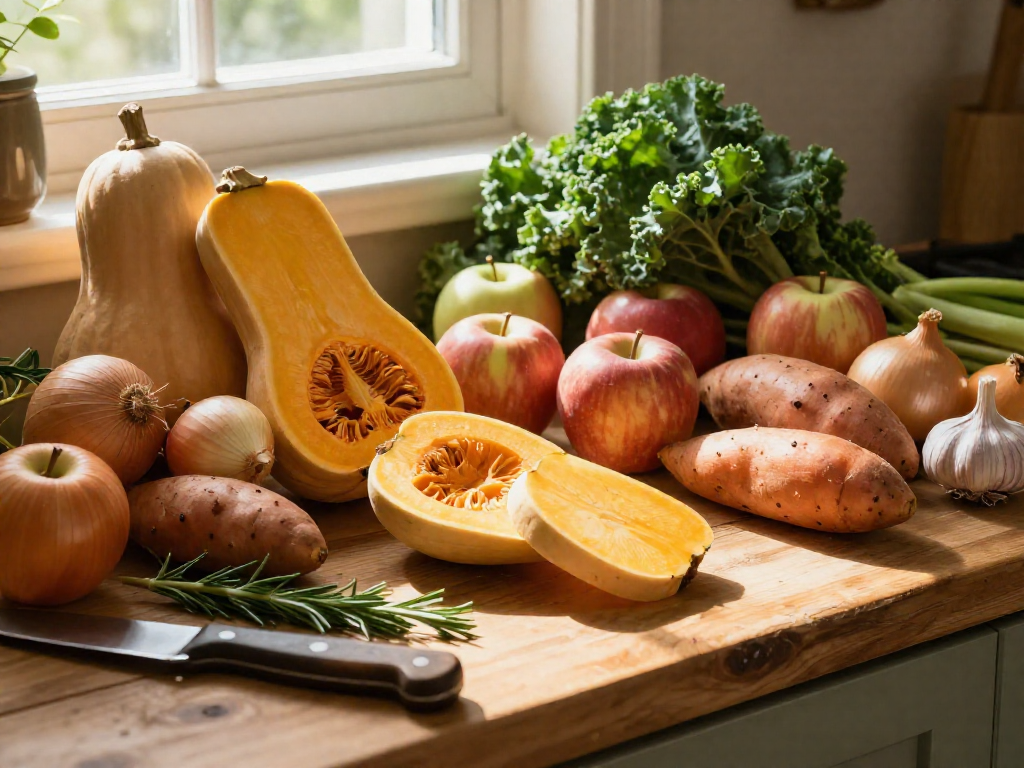
Batch cooking and freezing a season's worth of comforting fall meals comes down to a weekend blitz that stocks your freezer with ready-to-heat dishes. That single focused effort eliminates the nightly dinner scramble—no last-minute grocery runs or decision fatigue. Fall produce like butternut squash, sweet potatoes, and apples hits peak flavor and often drops in price, so your freezer meals taste better and cost less. But the real win is mental: you swap the 5 p.m. "what's for dinner?" panic for the quiet confidence of a stocked freezer. Every recipe can flex to your family's needs—swap proteins, grains, or veggies without changing the batch method.
The Weekend Game Plan: Step-by-Step Schedule
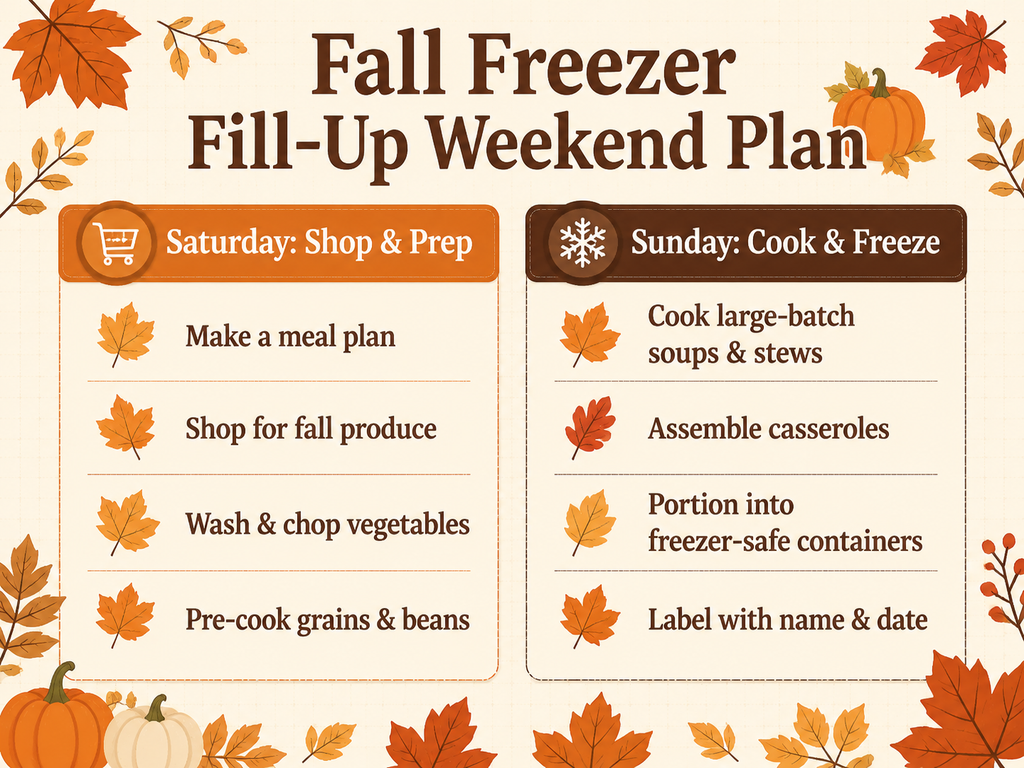
Your fall freezer fill-up isn't a vague cooking marathon — it's a system. Tackle it in four focused blocks, and you'll have dozens of meals stashed before Sunday dinner. Here's the exact weekend rhythm that's worked for hundreds of families I've coached through this (and you can grab a printable version at the bottom).
Friday Evening: Set Up for Success (1 Hour)
Don't cook a thing. Tonight is about stocking the kitchen and lining up your recipes so Saturday is pure momentum. After work or once the kids are in bed, do three things:
- Finalize your menu. Pick 4–5 core meals — think chili, butternut squash soup, shepherd's pie, and a few sheet-pan protein-and-veggie combos. Aim for variety but overlap ingredients (onions, carrots, celery appear everywhere). Write each meal on an index card or a shared note.
- Build a precise grocery list. Pull up your recipes and tally everything by category. Don't trust your memory — you'll forget the bay leaves. Break it into produce, protein, pantry, and dairy. Double-check spices; fall dishes lean hard on cumin, smoked paprika, and nutmeg.
- Set out your tools. Grab every large pot, Dutch oven, sheet pan, and mixing bowl you own. You want them out and clean. If you'll use a slow cooker or Instant Pot tomorrow, put it on the counter. This small act eliminates the 5-minute fumbles that sap momentum mid-cook.
Saturday Morning: Wash, Chop, Roast (3–4 Hours)
Hit the kitchen by 8 a.m. with coffee in hand. This block is all about prep — transforming raw groceries into building blocks. When you're done, your fridge will be a Tetris board of prepped ingredients.
First, crank on your oven to 400°F (200°C) and throw in any vegetables that benefit from roasting: butternut squash cubes (tossed in oil, salt, and pepper), halved onions, whole garlic heads, sliced sweet potatoes. Roasting intensifies sweetness and means you can dump caramelized veg straight into soups later.
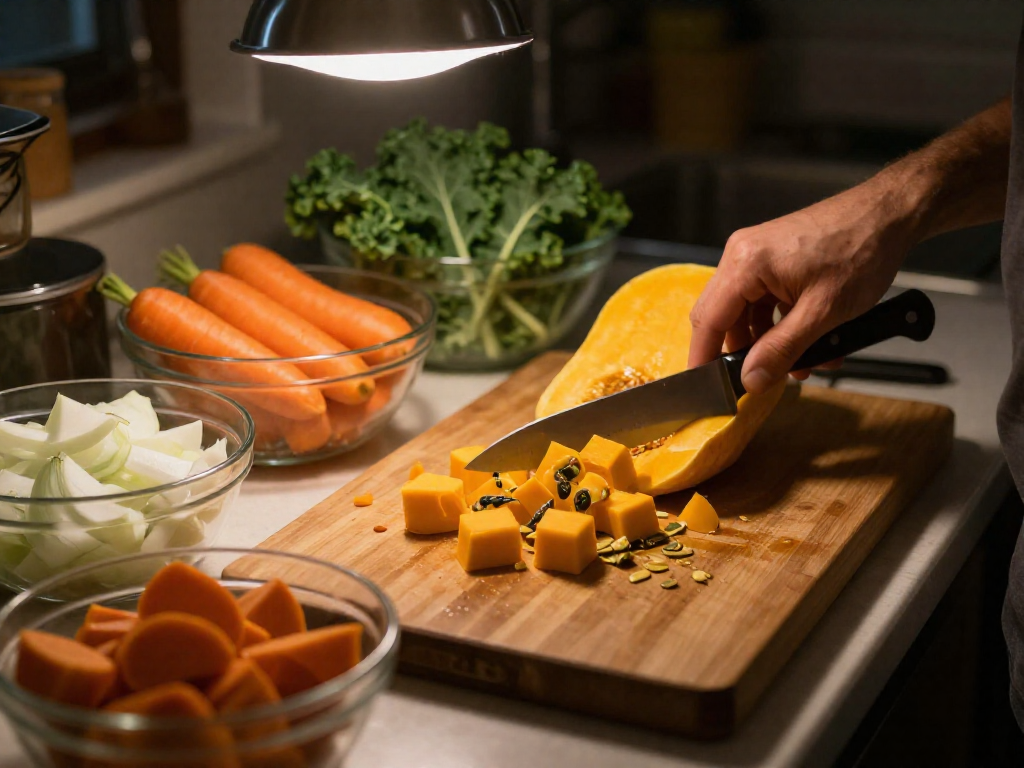
While those roast, start knife work. Chop onions, carrots, and celery in bulk — a food processor makes fast work here, but don't turn them to mush. Sauté what you need for your first soup or chili now, then bag the rest in airtight containers. Harder veg like butternut squash and sweet potatoes get cubed next; a sharp chef's knife and a stable cutting board are worth every penny.
If any meals start with a protein, cook it now. Brown ground beef or turkey for chili and shepherd's pie; sear chicken thighs for a future casserole. Do it in one large skillet, then portion it out. Deglaze the skillet with a splash of broth and save those browned bits — they're liquid umami for your soups.
Time-saving moves: Use the oven for multiple tasks. While squash roasts on one rack, put a whole chicken or a tray of bacon on another. The bacon fat becomes a flavor base for sautéing; the chicken meat gets pulled and frozen. Put on loud music or a podcast — this is the longest stretch, but it's the engine of the whole plan.
Saturday Afternoon: Build and Simmer (2–3 Hours)
Now you're cooking — assembling your core meals. Start with the longest-simmering pot first. That's typically a chili or a stew. Get it bubbling on the stovetop or in the slow cooker, then move to quicker builds.
For soups: Add roasted veg, broth, and aromatics. An immersion blender lets you puree right in the pot; if you like it chunky, pulse instead of blending smooth. For casseroles: layer your prepped proteins and veg into baking dishes, top with cheese or a crisp breadcrumb topping, but don't bake yet — you'll assemble, then freeze unbaked (bake day-of for fresh-tasting results). Shepherds pie: spoon your browned meat mixture into a dish, top with mashed potatoes (make a big batch now — they freeze beautifully), and freeze.
As you finish each dish, give it a taste and adjust salt and acid. A splash of apple cider vinegar brightens any heavy fall stew. Then move the pot off the heat and let it start cooling while you tackle the next.
Aim to have all your cooking done by 4 p.m. so things can cool thoroughly before you even think about packaging. That cooling time is non-negotiable — hot food in the freezer creates ice crystals and lengthens freeze time, dulling texture. But you can use that downtime to tidy, eat lunch, or take a walk.
Sunday: Cool, Package, Label, and Freezer Tetris (1–2 Hours)
This is the unglamorous part that makes the system work. Your soups and stews should be cool enough to handle. Set up a packaging station: containers, freezer bags, a ladle, a heavy-duty marker, and painter's tape or freezer labels.
Soups and stews: Fill quart-sized freezer bags, squeezing out air, then lay flat on a baking sheet to freeze. Once solid, they stand upright like books — a massive space saver. For liquids, bags beat rigid containers because they eliminate air pockets. Casseroles and assembled dishes: Line your baking dish with foil or parchment first, assemble, freeze until solid, then pop the block out and wrap tightly. You'll slide it back into the same dish for baking. Single-serve portions: If you have a small household, freeze two-cup portions. They thaw faster and reduce waste.
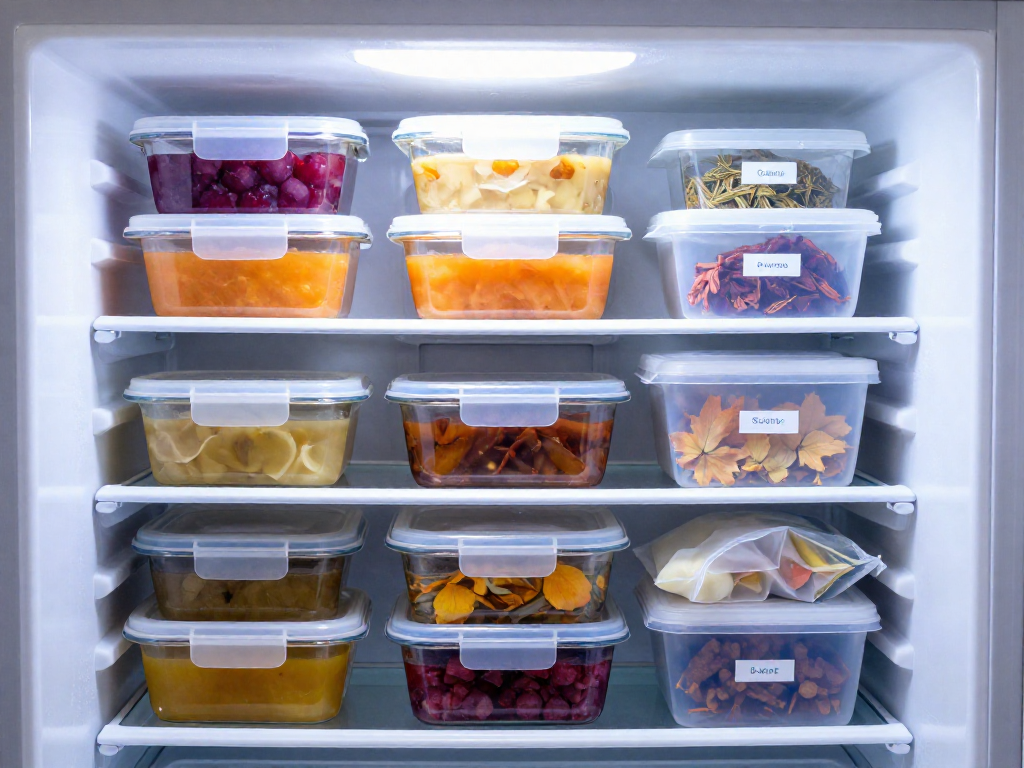
Label everything with the dish name, date, and reheating instructions — and be merciless with yourself. In a month, "Brown Stuff #1" is a mystery you won't want to solve. I write: Butternut Squash Soup — 11/2 — reheat on stovetop, add splash of milk.
Now the freezer Tetris. Organize by type: soups on one shelf, casseroles on another. Group meals by week if you're planning that far ahead. Cut an inventory list and tape it to the outside of the freezer — just a simple list with tally marks. Every time you pull a meal, cross it off. No more forgotten enchiladas languishing under ice.
Grab the printable schedule. I've put the whole weekend plan — with a checklist and a blank recipe grid — into a one-page PDF. Print it, tape it to the fridge, and check off tasks as you go. It's the difference between a chaotic weekend and a calm, stocked freezer.
That's it — four blocks, one weekend, and a fall full of weeknight dinners ready when you are.
Fall Freezer-Friendly Produce & Ingredient Cheat Sheet
Autumn’s bounty freezes beautifully, but a little prep goes a long way. Raw winter squash, for instance, will turn mushy if you freeze it whole. Instead, cube it, spread the pieces on a parchment-lined sheet pan, and freeze until solid—then transfer to bags. You’ll have pre-portioned squash ready to roast or simmer without clumping. Pears and apples tend to brown, so toss slices with a splash of lemon juice before flash-freezing; they’ll hold shape for pies and crisps. Hearty greens like kale, collards, and chard need a quick blanch (a dip in boiling water, then an ice bath) before you freeze them in flat-packed bags. Squeeze out the air, and they’ll tuck neatly into freezer corners.
Some ingredients just aren’t worth it. Potatoes turn grainy when defrosted, so leave them out of soups and stews you plan to freeze—add cooked potatoes when you reheat instead. Cream- or milk-based sauces can separate and become watery; you’re better off freezing the base and stirring in dairy after thawing. And those crispy fried onion toppings? They’ll go soggy. Store them separately at room temperature and sprinkle on just before serving.
Flash-freezing is your secret weapon for preventing sticky clumps. Lay cut fruit, blanched vegetable pieces, or even dollops of cooked puree in a single layer on a tray and freeze until firm—usually an hour or two. Once individually frozen, pack them into containers or bags, and you can grab exactly what you need for a single meal. This method works especially well for cranberries, pomegranate arils, and roasted pumpkin chunks. When you’re racing through a busy weeknight, pulling a handful of already-prepped produce from the freezer feels like a win.
5 Cozy Batch Recipes to Stock Your Freezer
These five recipes are built for the freezer first. Each one hits that deep, autumn comfort you want on a Tuesday night—but gets there with almost no active cooking when you actually serve it. Cook them over a single weekend, load your freezer, and you’ve got weeks of dinners that just need a spin in the oven or a gentle reheat on the stove.
Butternut Sage Soup (Dairy-Free)
A velvety soup that freezes like a dream—no cream to separate or curdle. Start with a couple of pounds of cubed butternut squash, an onion, a few garlic cloves, and a handful of fresh sage leaves. Sauté the aromatics, add the squash and enough vegetable broth to cover, then simmer until tender. Purée until silky smooth. For extra richness without dairy, blend in a can of full-fat coconut milk at the end. Cool the soup completely, then portion into quart-size freezer bags or wide-mouth jars, leaving an inch of headspace. To reheat, thaw overnight in the fridge and warm gently on the stove, adding a splash of broth if it thickened.
Beef and Root Vegetable Stew
This one actually improves after freezing—the long, slow braise melds the flavors, and the chill time deepens the savory notes. Use about 2 pounds of well-marbled beef chuck, cut into large cubes, and brown it deeply in batches before building the stew with onions, garlic, tomato paste, red wine, and beef stock. The root vegetable trick: hold off on the potatoes. They turn mealy in the freezer, so either leave them out entirely or freeze the stew base without them, then add cubed waxy potatoes when you reheat. Instead, load the pot with carrots, parsnips, and turnips—roots that hold their texture beautifully. Portion into freezer-safe containers, cool, and freeze. Reheat straight from the freezer on low heat, stirring now and then, and simmer fresh potatoes right in the pot.
Freezer-Friendly Apple Crumble
The crumble is ready to go from freezer to oven, no thawing required—just tack on about 15 extra minutes of baking time. Toss sliced tart apples (like Granny Smith or Honeycrisp) with a little sugar, cinnamon, and a squeeze of lemon, then pile them into a buttered 9×13 dish. The topping is a simple mix of oats, flour, brown sugar, cold butter, and a pinch of salt, rubbed together until it looks like wet sand. Sprinkle it over the fruit, wrap the dish tightly in a layer of plastic wrap and then foil, and freeze. When a crisp fall dessert calls, uncover, bake at 375°F until the juices bubble and the top is deeply golden. Keep an eye on the last 10 minutes; if the crumble browns too fast, tent with foil.
Make-Ahead Butternut Squash Lasagna
Layers of roasted squash, ricotta spiked with sage, and no-boil noodles make this lasagna a freezer hero. Roast cubes of butternut squash tossed in olive oil and salt until tender and caramelized. Blend some into the ricotta filling, leaving the rest in chunky pieces. Build the lasagna in a disposable foil pan: start with a thin layer of béchamel (or a simple garlicky cream sauce), then noodles, ricotta mixture, squash chunks, a sprinkle of Parmesan, and repeat. You can freeze it unbaked—just wrap tightly and bake straight from the freezer, adding 20–30 minutes to the covered baking time. Or bake it first, cool, and freeze individual portions. Either way, the squash stays rich and sweet, and the sage keeps the whole dish from feeling heavy.
Harvest Grain Bowls (Meal Components)
Rather than a single dish, this is a template: cook and freeze the building blocks, then assemble bowls in minutes for a quick lunch or light dinner. Roast a big batch of cubed sweet potatoes, brussels sprouts, and red onion until deeply charred. Cook farro or quinoa and let it cool completely. Make a punchy vinaigrette—maple, mustard, and apple cider vinegar work perfectly. Freeze the grains in flattened quart bags, the roasted veggies in a single layer on a sheet pan before bagging, and the dressing in small lidded containers. On a busy weeknight, you’ll pull out a handful of grains, a scoop of veggies, a drizzle of dressing, and maybe a sprinkle of toasted pecans or crumbled goat cheese. No single recipe locks you in; you scale the components to what you have and love.
Smart Freezer Storage & Rotation Systems
The best batch-cooking session means nothing if meals vanish into a freezer abyss, only to resurface months later as mystery blocks. A few simple habits turn your freezer into a reliable weeknight command center.
Square, stackable containers are your first line of defense. They waste zero space compared to round ones and let you build tidy columns by recipe. For soups, stews, and sauces, reusable silicone bags laid flat to freeze are brilliant — they thaw fast and store like file folders once solid. Whatever you choose, skip the cheap plastic that cracks after two freezes; sturdy glass or thick-walled plastic with snap-lock lids pays off every time you skip a takeout order.
Label every item with three things: the dish name, the date, and a quick reheating note (“350°F 20 min covered” or “stovetop low, add splash broth”). You’ll thank yourself on a chaotic Tuesday.
Finally, keep a simple first-in, first-out sheet — a magnetic notepad on the freezer door works. List meals added and cross them off as you pull. When you restock, older items move front and center. It’s the quiet system that prevents “What was this?” and keeps fall favorites rotating onto your table, not into the trash.
Reheating for Instant Comfort (Without Mush)
For soups and stews, you have two solid paths. Thaw a portion overnight in the fridge and warm it gently on the stovetop, or skip thawing entirely — dump the frozen block into a pot with a splash of water, cover, and heat low and slow, breaking it apart as it melts. Either way, stir occasionally and stop as soon as it’s steaming, not bubbling hard.
Casseroles call for the oven to revive that baked-through texture. Pop them in straight from frozen at 350°F, covered, until heated through — usually 30–45 minutes for a 9x9. If you’re in a rush, the microwave works, but you’ll lose the crusty edges; compromise by microwaving to nearly hot, then finishing under the broiler for 5 minutes. Cobblers and crisps? Always oven-reheat uncovered at 350°F until the topping crisps back up (about 15–20 minutes). The microwave will turn that crumble to mush every time.
See also
- /meal-planning-for-dual-income-families
- /freezer-inventory-printable
- /winter-freezer-prep-guide
Related articles
Winter Warmer: Batch-Cooking Soups and Stews for a Month
How do I batch cook and freeze a variety of soups and stews for winter?
Jul 31, 2026 · 7 min read
Seasonal Chore Batching: Spring Cleaning and Fall Yard Work Templates
How can I apply batching techniques to deep seasonal chores?
Jul 31, 2026 · 8 min read
The Emergency Meal Stash: A Seasonal 'Oh Crap' Kit for Busy Weeks
How do I create a stash of emergency meals for inevitable hectic times?
Jul 31, 2026 · 5 min read