Laundry Day Overhaul: Batching for a Family of Four
How do I create an efficient laundry batching system that doesn't pile up?
On this page
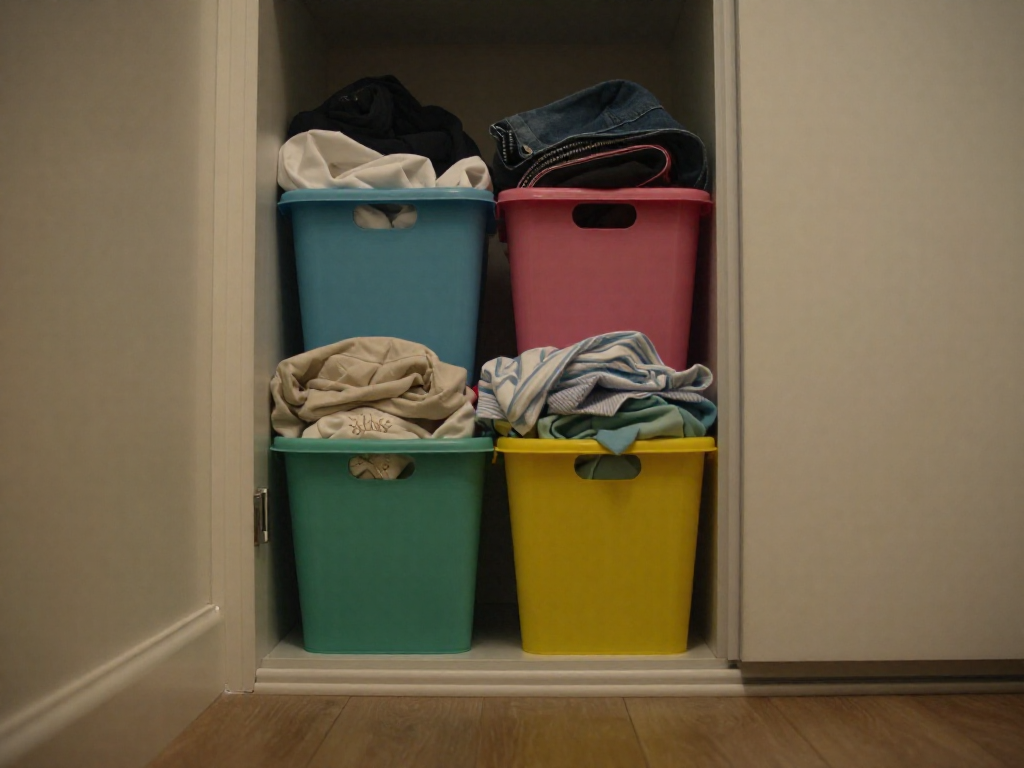
Start with the all-too-familiar scene: a mountain of laundry, no clear system, and the frustration of never being done. For a dual-income family of four, laundry can multiply silently—until it swallows a weekend. This guide reframes laundry from a never-ending chore into a batching system you can run once or twice a week with minimal drama. No fluff, just repeatable steps.
Your Sorting Command Center
An efficient laundry batching system that never piles up starts with a sorting command center that kills decision fatigue at the source. The fix is dead simple: stop sorting on wash day. Instead, sort at the point of undressing, before a single sock hits the floor.
In practice, that means every bedroom—and the bathroom where towels get tossed—gets a divided hamper or a set of clearly labeled bins. I’m not talking about a fancy gadget; even a three-section rolling sorter from the big-box store works beautifully. Assign one section per family member, and dedicate separate bins for towels and sheets. Color-code the labels or paint the bins themselves so the system is obvious to a sleepy seven-year-old. Once you eliminate the “dump everything in one basket” habit, you’ve removed the single biggest bottleneck in the laundry flow: the dreaded Sunday sort.
The real magic is what this shift does to your mental load. When dirty clothes are pre-sorted, you’re not handling each item two or three extra times—picking through a mountain to find reds, digging for delicates, separating kids’ jeans from their pajamas. Instead, you grab a labeled bag, zip it, and toss it straight into the machine. That’s a wash cycle you can start while coffee is brewing, no brainpower required.
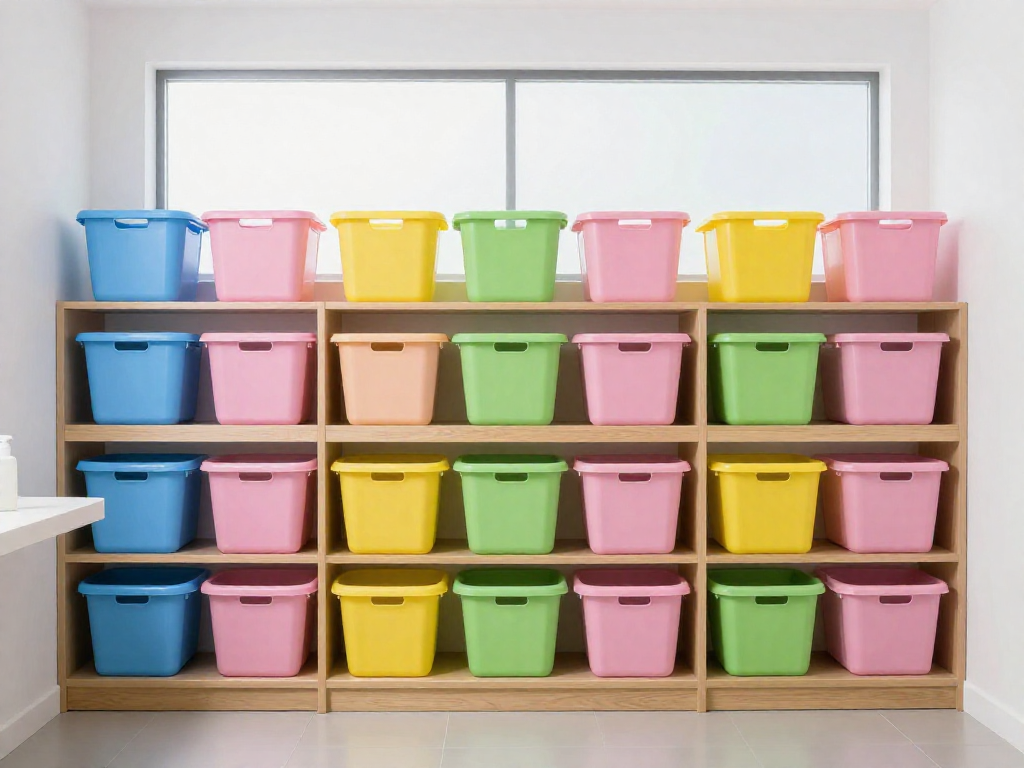
For a family of four, I recommend a “one bag per person” setup that doubles as the transport vessel. Canvas laundry bags with drawstrings, hung on a wall rack or tucked into a cubby, serve as both the collection bin and the washer-load. On laundry day, you pull Mom’s bag, Dad’s bag, Kid 1’s bag, Kid 2’s bag, and a separate sack for linens. No guessing, no merging, no resentment over whose turn it is to sort. If you’re tight on space, even a row of clear plastic bins in the laundry room can become the drop-off station; just train the household to deposit directly into their labeled bin as they undress.
This single habit—pre-sorting upstream—transforms laundry from a chaotic pile-up into a predictable, batching-friendly rhythm. You’ll know exactly how many loads you have before you start, you’ll never discover a rogue crayon in a finished load, and you’ll reclaim the hours you used to spend untangling damp, mixed-up laundry. Build the command center once, and laundry day becomes a series of simple, mindless tasks instead of a weekend-eating monster.
The Batching Schedule: When and How Many Loads

For a family of four, four to five loads a week is the sweet spot—anything more and you’re living in the laundry room; anything less and you’re running out of underwear. That volume doesn’t have to mean a marathon Saturday. Split it into two shorter sessions: a midweek evening push and a Saturday morning finish. Wednesday night tackles two loads (say, darks and lights) so the weekend isn’t a mountain. Saturday morning handles the rest—towels, sheets, and any odds and ends. This rhythm keeps the machines running while you do other things, not the other way around.
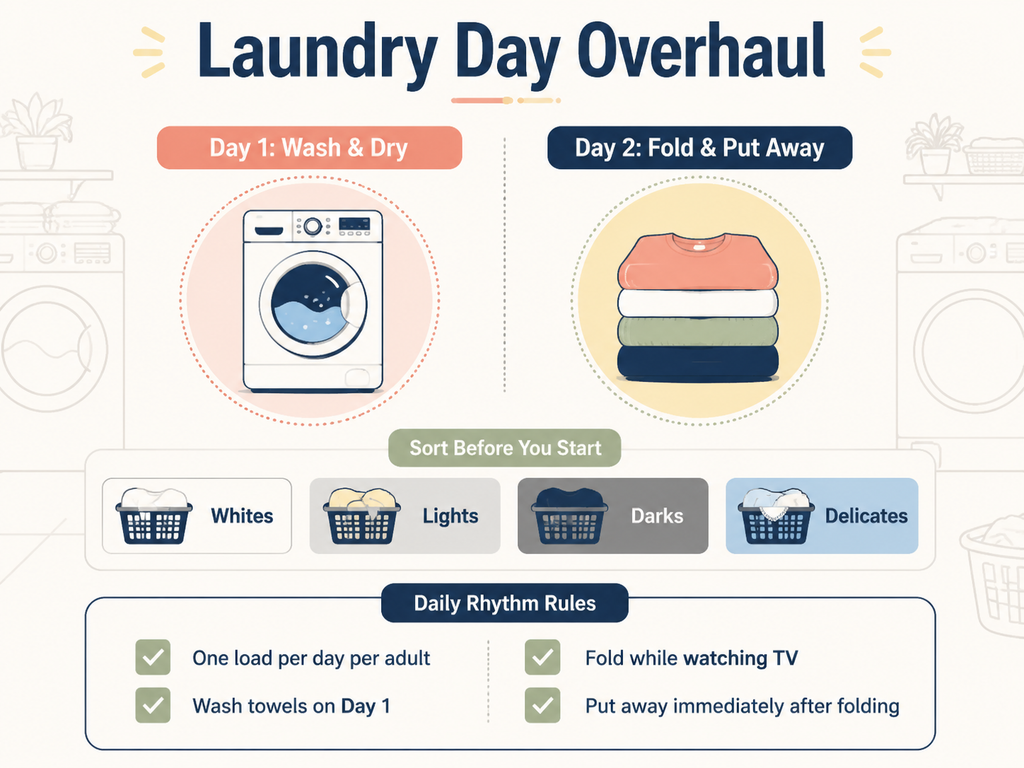
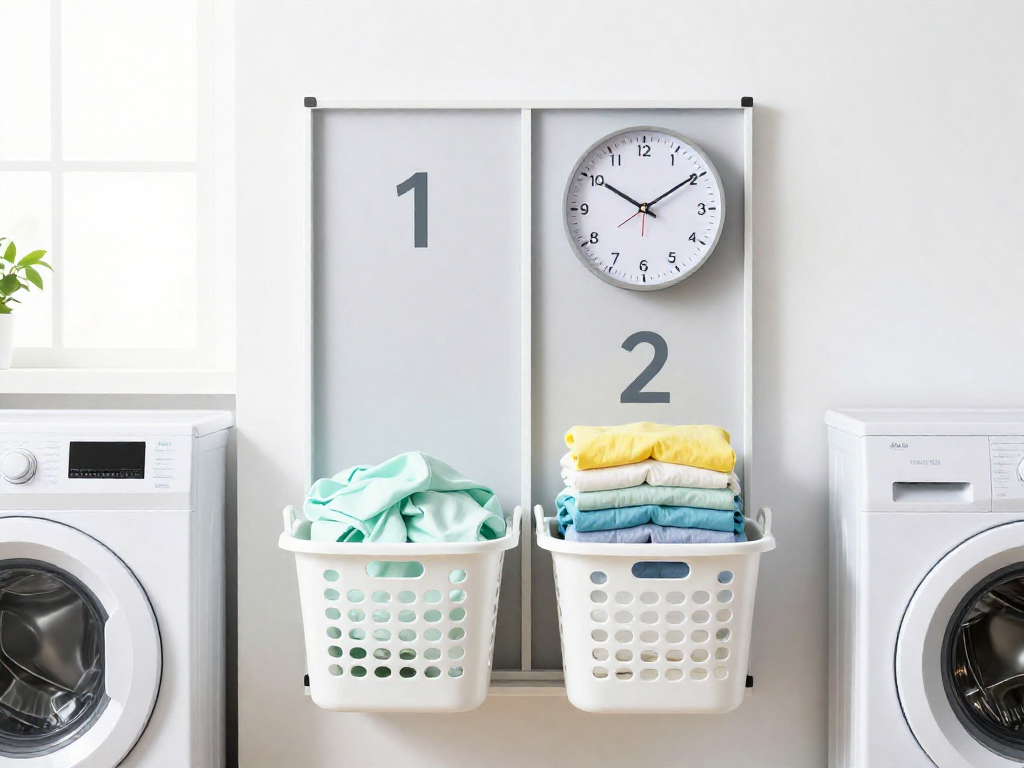
The real game-changer is adopting a two‑day cadence for each batch. Wash and dry on day one; fold and put away on day two. It sounds counterintuitive when you’re used to powering through a single laundry day, but it’s the single best defense against clean clothes camping in baskets for days. On Wednesday, run the washer and dryer; before bed, pile the dried clothes into a dedicated basket (one per person makes this instant). Thursday evening, you’re only folding and distributing—a 15‑minute task instead of a grueling multi‑hour slog. Saturday’s loads follow the same pattern: dry by midday, and fold Sunday evening while watching a show. By decoupling the steps, you never face a wrinkly, forgotten heap.
Sequencing loads strategically prevents you from staring at an idle machine. Always start with the bulkiest, slowest‑drying items: towels. They hog the dryer, so get them in first. While towels tumble, run a load of colors or darks—by the time the wash finishes, the dryer is free. Delicates or synthetics go last because they often dry fast or need a lower heat setting, and you don’t want them sitting wet while waiting for the previous cycle. If you have a child who generates a random sports uniform or a suspiciously stained shirt, toss that in with the delicates to handle immediately rather than letting it fester until the next session. This sequence turns laundry from a waiting game into a smooth assembly line.
Streamline the Wash Cycle Itself
Most everyday clothes don't need a marathon wash. Switch to the quick-wash cycle for lightly soiled loads — it cleans just as well in half the time. Heavy-duty cycles are for genuinely grimy stuff: muddy sports kits, kitchen towels, the things that earn a longer soak.
Keep a stain stick or spray right next to the hamper and hit spots before the garment even drops in. That tiny upfront step saves you from rewashing or scrubbing later. When you load the machine, fill it loosely to the head of the drum — enough for friction, but not so packed that water can’t circulate. Toss in three or four wool dryer balls and they’ll separate damp layers, cut drying time, and leave everything softer without chemicals.
Conquer the Fold: The Power Hour
Folding is the laundry bottleneck — the moment clean clothes turn into a mountain that lives on the couch for three days. The fix? A dedicated Power Hour that turns a dreaded chore into a predictable, almost automatic finish. No one loves folding, but when you treat it like a system instead of an afterthought, it takes a fraction of the time and leaves your house noticeably calmer.
Start with the surface. Clear the kitchen island, the dining table, or even a folding table you pull out just for this. If you’re crouching on the floor surrounded by socks, you’ve already lost. Give yourself enough space to spread out a full load. As soon as the dryer buzzes, dump everything onto that surface — warm clothes wrinkle less, so speed matters. Right then, sort into person-labeled piles. Not later. Grab a laundry basket for each family member (or designate spots on the counter) and toss items directly into their pile. This immediate sort cuts folding time in half because you’re not handling each shirt twice.
Now the sprint. Set a visible timer for 20 minutes and make it a family event. Toddlers can match socks and deliver folded pants to bedrooms. School-age kids handle their own clothes: shirts, shorts, underwear — nothing fancy, just a consistent fold. The timer adds enough pressure to keep everyone moving but not so much that it feels chaotic. If you have very young children, put on a playlist and let them dance while you fold; they’ll still associate the rhythm with a quick, bounded task. The goal is simple: finish or come close before the alarm sounds, and then everyone walks away guilt-free.
Here’s the rule that makes it stick: one touch per item. The second your hand picks up a shirt, you fold it or hang it and place it directly into that person’s basket. No re-sorting stacks on the back of a chair. No “I’ll put it away later.” If a shirt needs to go into a specific drawer in a kid’s room, the basket goes to that room right after the sprint — or, better yet, the child carries it there immediately. Hang clothes that are prone to wrinkles directly from the pile; don’t fold them just to re-wrinkle in a basket.
Finally, built-in accountability. Each family member’s basket is their own. If they don’t put it away, it sits in their room, not on the common area table. This gently shifts the mental load away from one parent and teaches kids that laundry ends when clothes are actually in drawers. The Power Hour isn’t about perfection; it’s about finishing. When you close that last drawer, you’re done — no mountain waiting for you tomorrow.
Enlist Your Little Helpers
Once the laundry system is humming, the real multiplier is getting the kids in on it. A preschooler who loves matching socks isn’t just playing—they’re lightening your load and absorbing the idea that chores are a shared family rhythm, not a parental solo act.
Match the task to the age, not the mood. Preschoolers can pair socks out of a clean pile, stack washcloths, or toss undies into a small bin. By kindergarten, they can fold their own pants, sort tops from bottoms, and match pajama sets. Around second grade, most kids can carry a basket from the dryer to the couch, fold simple items, and put them into piles for each room. By eight or nine, hand them their full basket after the wash and expect it to get to closet and dresser—with a once-over check. The goal isn’t perfection; it’s independence. When they never touch a dirty towel, they don’t notice the magic that keeps it clean; when they fold that same towel, they start to respect the system.
Make it quick and mildly competitive. Race a sibling to see who can find all the mate-less socks first, or set a 5-minute timer and see how much each person can fold. A small, immediate reward bridges the gap for reluctant helpers: a sticker chart that adds up to a stay-up-late pass, or post-laundry screen time.
Beyond the hourly gains, you’re wiring their brains for competence. Kids who handle their own laundry learn sequencing, responsibility, and the quiet confidence that they can run their world. That means fewer frantic shouts on Monday morning, and eventually, a teenager who runs a load without being asked. When you label the activity as “family reset time” instead of “chores,” the resistance drops—and the entire household breathes easier.
The One‑Touch Rule & Maintenance Hacks
The single most effective way to keep clean laundry from becoming a backlog is the one‑touch rule: as soon as a piece of clothing is dry, you handle it exactly once—fold it (or hang it) and put it away immediately. No staging piles on the couch, no laundry‑chair purgatory. This ends the cycle in the same breath it finishes.
To make that stick, set up a “basket parade” spot. Once you’ve folded during the power hour, each family member’s basket goes to their designated landing zone—by their bedroom door or in the hall—ready for a sixty‑second put‑away dash the next morning. You’ll skip the demoralizing tower of folded laundry that somehow lives on the kitchen table all week.
Aim to clear out‑of‑season clothes in one planned session every six months—swap heavy sweaters for shorts in a single afternoon. Keeping only what’s current in the drawers makes it dead simple to put things away and stops the dreaded “why is this in here?” clutter that bogs down the whole system.
And remember: putting away is not a separate chore. It’s the final minute of your fold power hour. When your brain knows the job isn’t done until the drawer closes, you stop setting yourself up for a second round of sorting later.
FAQ
How many loads of laundry does a family of four generate per week?
A family of four typically generates enough laundry to fill several loads each week, with separate categories for darks, lights, delicates, towels, and bedding, making a dedicated laundry day the most practical approach.
What is the best day to do laundry for a working family?
Saturday is the ideal laundry day for a working family, because you can start early, fold in between weekend activities, and wrap up with everything put away before Monday rolls around.
How can I get my kids to help with laundry without a fight?
Assign kids a simple, age-consistent task—like sorting socks, folding hand towels, or putting away their own clothes—and anchor it to the same laundry day time slot each week so it becomes a predictable, non-negotiable part of the routine.
What if I don't have space for multiple hampers?
Use a single bin with internal dividers or labeled drawstring bags clipped to a slim over-the-door rack; each family member or color category gets its own compartment without eating up floor space.
Is it better to do laundry every day or batch it all at once?
Batching all laundry into one designated day is better for working families because it compresses the entire chore into a single session, eliminating the constant background stress of a perpetually running washer.
See also
- Weekly Chore Chart Template for Busy Families
- Meal Prep Sunday: The Batching System That Saves Our Weeks
- Decluttering Kids' Clothes: A Seasonal Guide
Related articles
Batching Deep Cleaning: A Monthly Map for Working Families
How do I batch deep cleaning tasks into one weekend per month?
Jul 31, 2026 · 9 min read
The 'One Touch' Rule: A Minimalist Approach to Daily Tidying
How can the 'one touch' decluttering rule streamline my family's tidying?
Jul 31, 2026 · 4 min read
Speed Cleaning Secrets: A Listicle of Hacks for Busy Families
What are the most effective quick-cleaning tricks for a family home?
Jul 31, 2026 · 4 min read