Batching Deep Cleaning: A Monthly Map for Working Families
How do I batch deep cleaning tasks into one weekend per month?
On this page
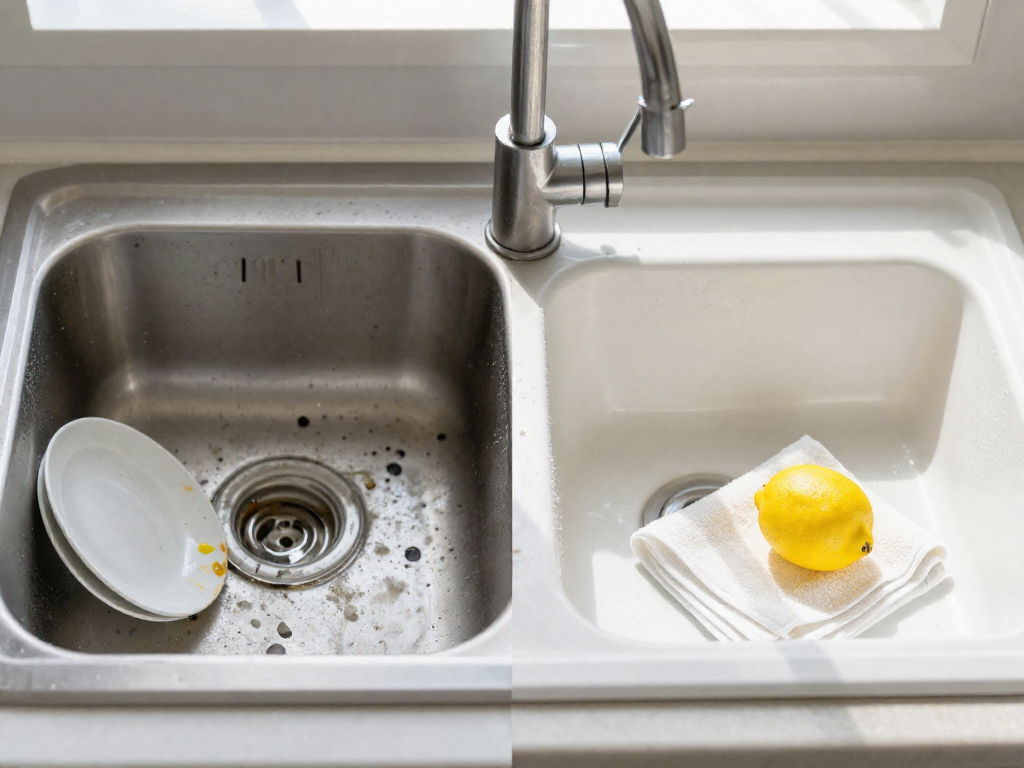
Start with the struggle: working parents facing grimy baseboards and dusty blinds, feeling guilty about not deep cleaning. Pose the solution: batching deep cleaning into one weekend monthly. Preview the monthly map.
Why Monthly Batching Beats Weekly Deep Cleaning (For Working Families)

The most sustainable way to deep clean as a busy working family is to batch it all into a single, focused weekend each month. Spreading deep cleaning across weekly sessions rarely works because it fragments your energy and keeps chores perpetually hanging over you. Instead, clearing the calendar, cranking up the music, and knocking out everything in one go leaves your home genuinely clean and frees up your other three weekends entirely.
Your Pre-Weekend Prep List: What to Do Before the Batching Weekend
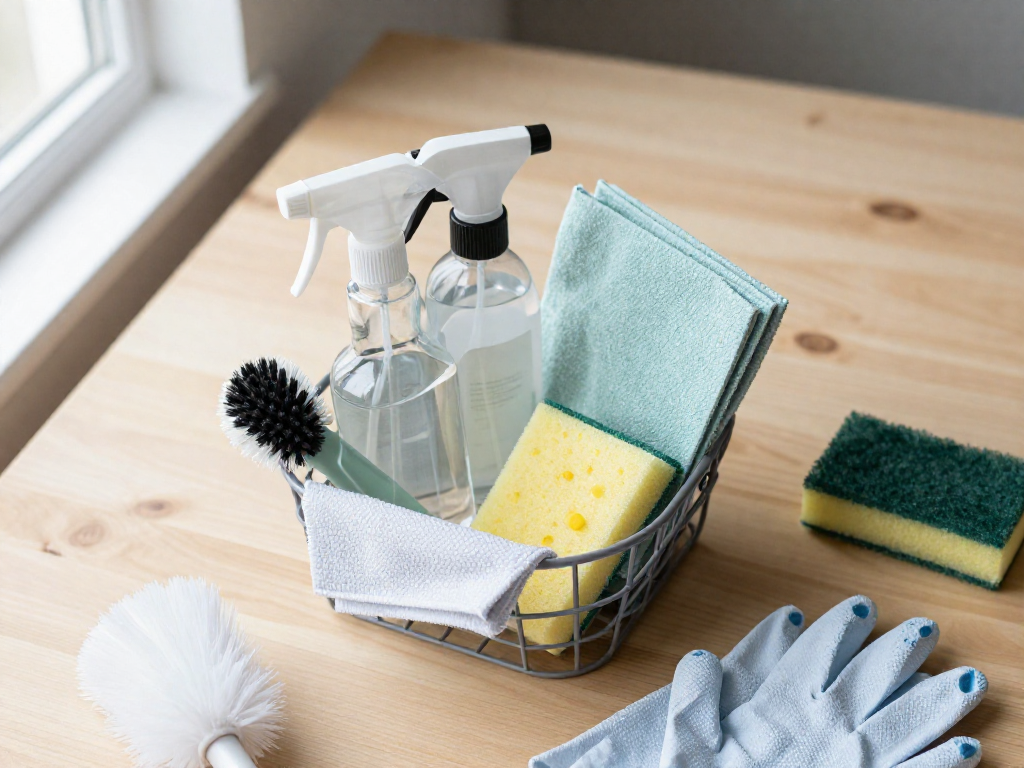
A smooth batching weekend starts long before you pick up a scrub brush. The work that makes Saturday feel effortless happens midweek, and skipping it is why so many deep-cleaning plans fizzle out. Start by clearing the decks: pick two or three high-traffic surfaces—kitchen counters, the dining table, the bathroom vanity—and spend ten minutes each evening starting Wednesday. You're not cleaning; you're just moving things back to their homes. A map of clutter is far easier to navigate than a jungle when you're racing the clock.
Next, give your supplies a ten-minute audit. Check your all-purpose cleaner, glass spray, bathroom scrub, and a powdered cleaner for toilets and tile. If you use refillable concentrate, refill it now. Pull out your mop pads, microfiber cloths, and reusable dusting heads and toss them in the wash on Thursday so they're dry and ready by Saturday morning. Vacuum bags or cordless vac filters? Order replacements online by Wednesday if you're low—nothing tanks momentum like a mid-clean run to the store.
Finally, get everyone in on the family chat. Send a quick message Thursday night: “I’m deep-cleaning Saturday morning. Can everyone have their floors, couch, and bathroom counter picked up by Friday bedtime?” This turns adults and older kids into allies, not obstacles, and gives you a head start before you even begin. A little midweek prep makes batching weekend the victory lap, not a frantic scramble.
The Zone Rotation System: Map Your Home for Year-Round Deep Cleans
Most deep cleaning advice falls apart for busy families because it asks you to clean everything every week. Zone rotation flips that: you focus on one area per month, going deep while maintaining the rest with light touch-ups. The result? Nothing gets neglected, and your weekends stay sane.
Divide your home into five to six zones
Start with the rooms you use daily. A standard split is kitchen, bathrooms, bedrooms, living areas, and utility spaces (laundry room, entryway, garage). Large open-plan layouts need sub-zones—treat the kitchen side of a great room separately from the dining nook. If you have three bedrooms, group two together unless one is a guest room that barely sees traffic; then it joins a lighter month.
What matters is workload parity. A master bath might be its own zone, while a powder room pairs with the hallway. Kitchens are beasts, so give them a month alone. Utility zones can bundle seasonal tasks: gutters in fall, window tracks in spring.
Build a 12-month rotation that works with your calendar
Map the year on paper or a spreadsheet. Assign one zone to each month, cycling through the list twice. The first pass tackles deep grime; the second acts as a refresh. Leave two to three months blank, not as “skip” months but as built-in breathers. December and July are obvious candidates—holidays and summer vacations sap energy—so put your easiest zone there, or none at all.
Example rotation:
- January: Kitchen
- February: Bedrooms & closets
- March: Bathrooms
- April: Living areas & upholstery
- May: Utility spaces & outdoor entry
- June: Kitchen refresh
- July: Open (summer break)
- August: Bedrooms refresh & linen purge
- September: Bathrooms refresh
- October: Living areas & window sills
- November: Utility spaces & garage
- December: Open (holidays)
Notice how intense zones like kitchen and bathrooms hit early in the year when motivation is high. Lighter zones land in busy months. The second pass in June and August is shallower—wipe down cabinets instead of emptying them, flip mattresses rather than washing all bedding.
Make your map physical and visible
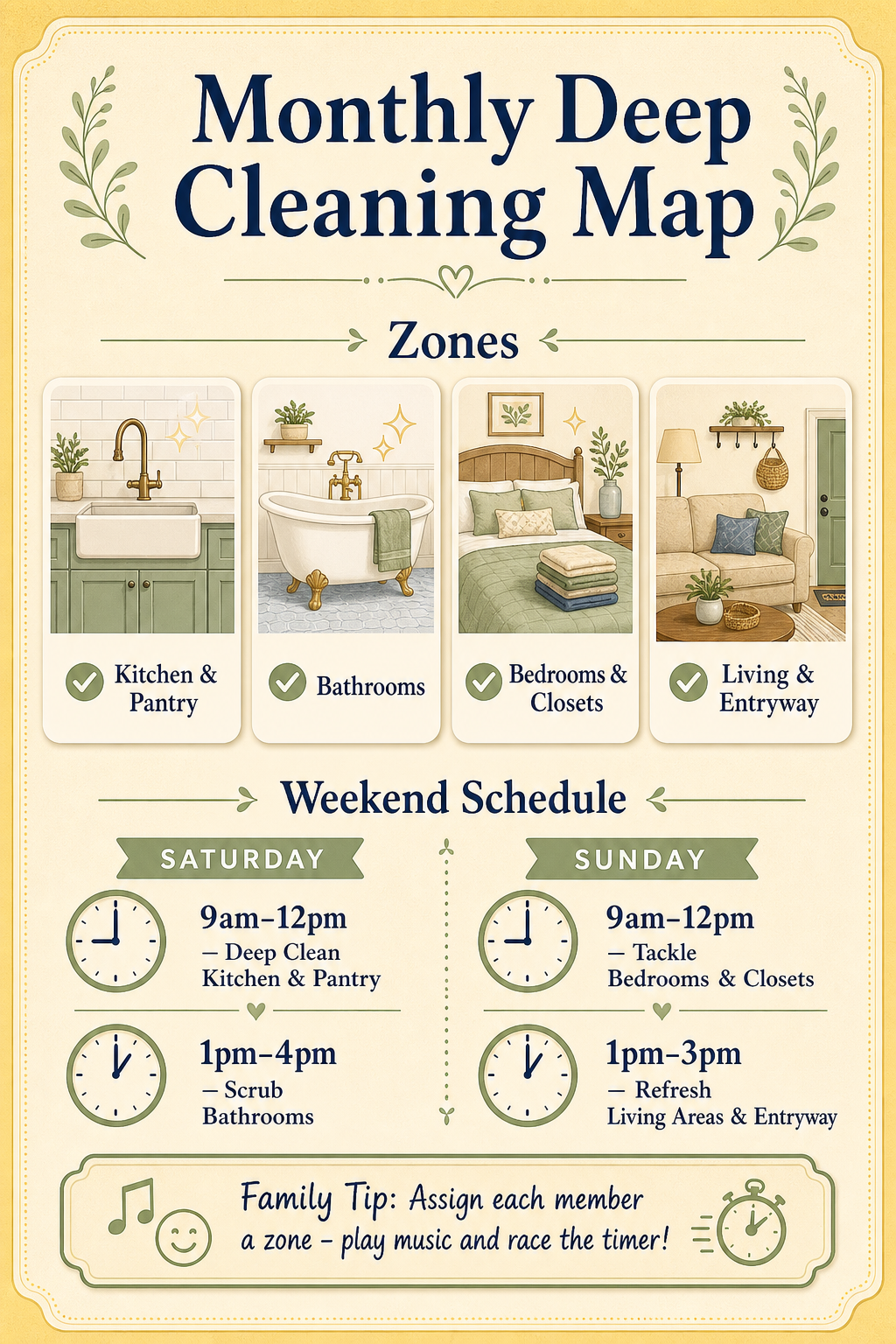
A printed zone map on the fridge or inside a cabinet door does two things: it reminds everyone which room owns this month’s attention, and it lets you jot down task lists as you notice problems. Use a simple grid: column for month, row for zone, and a checkbox for completed. Laminate it so you can erase and reuse year after year.
You don’t need fancy templates. Draw a rough floorplan on a single sheet, shade the active zone, and list five to six deep tasks per room. For the kitchen: degrease range hood, scrub grout, organize pantry, descale coffee maker, clean oven. That specificity prevents a month from sliding by with just a quick vacuum.
Zone rotation isn’t about perfection; it’s about never having to do everything at once. Once the map is up, all you do is follow the highlighted area during your batching weekend. The rest of the house coasts on your pre-weekend prep. After a year, you’ll have hit every corner twice, and the dread of deep cleaning disappears—because it’s finally a system, not a crisis.
The Weekend Map: A Sample Batching Schedule
Friday evening sets the tone. Spend one hour — no more — getting the house ready. Gather every cleaning supply you'll need: microfiber cloths, all-purpose cleaner, glass spray, grout brush, vacuum with attachments, and a couple of empty bins for stray items. Do a final sweep declutter, putting shoes in closets and papers in a pile to sort later. The goal isn't perfection; it's removing obstacles so Saturday starts with momentum.
Saturday morning is your power block. Wake up, eat a real breakfast, then hit the first deep-clean session from 8:00 to 10:30 a.m. Work in focused bursts: 60 minutes on, followed by a 15-minute break to hydrate, stretch, and check on the kids. This hour-on, fifteen-off rhythm keeps energy steady across the weekend. Use this morning to tackle the zone that bugs your family most — often the kitchen and bathrooms. Scrub grout, descale showerheads, degrease the range hood, and wipe inside cabinets. Pull out large appliances if your schedule allows, but stick to the clock. When the timer dings at 10:30, walk away.
After lunch, the Saturday afternoon shift runs from 1:00 to 3:00 p.m. This session homes in on detail work that never makes the weekly list. With windows, baseboards, doorframes, and light fixtures, you're after the slow-buildup grime. Dampen a microfiber with warm water and a drop of dish soap for baseboards; use a squeegee and dry cloth for streak-free windows. If your home has multiple bedrooms, rotate who does which room to keep morale up. At 3:00, everything gets put away, and you are officially off the clock. Saturday evening is sacred. Order takeout, watch a movie, or just bask in the cleaner air.
Sunday morning reclaims the corners you normally ignore. Another two-hour shift, starting around 9:00 a.m., gives you the push to finish. Open all the interior doors and wipe the tops of doorjambs; vacuum upholstery and under couch cushions; pull out the fridge and stove to clean underneath if you skipped it Saturday; spot-clean light switches, door handles, and banisters. These tasks take minutes individually but add up to a genuinely thorough clean. Keep the hour-on, fifteen-off cadence so nobody hits a wall.
The final hour Sunday afternoon is for reset and reward. Run a load of cleaning rags, put supplies back in their designated spot, and do a walk-through with the family. Point out what went well, not what got missed. It's important to celebrate — a clean home for a busy family is a shared win. Over time, this exact batching block becomes muscle memory.
Adjust the map to your life. A smaller apartment might wrap by Saturday afternoon; a sprawling house might need the full Sunday afternoon or a second weekend for windows and exterior tasks. If you have younger kids, trade off with your partner — one deep cleans while the other takes the kids out for the morning. The schedule is a template, not a tyrant.
Tools & Hacks That Cut Cleaning Time in Half
A few well-chosen tools shrink deep-cleaning time dramatically. Start the weekend with a robot vacuum that's already run its course the night before — it eats dust and pet hair so you don't sweep. Keep a cordless stick vacuum by the stairs for quick touch-ups between zones. For wiping surfaces, buy a big pack of microfiber cloths and assign one color per zone (blue for bathrooms, yellow for kitchen) to prevent cross-contamination without wasting time sorting. Streamline your chemicals: one gentle all-purpose spray safe on stone, sealed wood, and laminate replaces a cabinet full of specialty bottles. Pre-mix a gallon in a labeled spray bottle before you even start so you're not hunting for refills mid-scrub. Finally, set a timer for 25-minute sprints with 5-minute breaks. That Pomodoro beat keeps you sharp — and prevents that slow drift into half-hearted polishing by noon.
Family Involvement: How to Assign Tasks Without Nagging
Getting everyone on board starts with ditching the vague “help out” and replacing it with a clear, predictable system. Each family member gets a laminated checklist per room that spells out exactly what needs doing—wiping baseboards, vacuuming edges, scrubbing sinks. No guessing, no sidetracking.
Assign tasks by ability, not just age. A toddler can match socks or dust low surfaces with a microfiber mitt. A school-ager can empty small trash cans and wipe doorknobs. Teens and adults take on the heavier lifts: deep-cleaning bathrooms, mopping, or decluttering before the session. The key is giving everyone a defined zone they own for the month.
Make it a shared sprint with a “cleaning power hour.” Crank a high-energy playlist, set a visible timer, and tackle the house as a team. The goal isn't perfection; it's fast, focused progress. When the timer dings, stop and move on. The momentum shift is real—kids stay engaged because the end is always in sight.
Rotate the zones monthly. Let the teenager who tackled the kitchen last time swap to the living room. It keeps the work from feeling like a permanent sentence and builds competence across the house. Post the rotation on the fridge so no one is surprised.
Cap it with a reward that's already on the calendar. A family movie night, a pizza order, or a board game marathon after the power hour gives everyone a shared finish line. No nagging required—just the promise of a treat and a clean home for the weeks ahead.
Monthly Maintenance: Keeping the System on Track
Miss a weekend? Don’t scrap the whole month. Run a one-hour mini-reset: pick the single grimiest zone (like the bathroom you’ve been avoiding) and do only the top three tasks from its checklist. You’ll stop the slide without burning a full day.
Some months are just heavier—sick kids, work crunches, low energy. When that hits, shrink your deep-clean to maintenance-only mode. That means wiping surfaces, vacuuming high-traffic paths, and skipping any extras like baseboards or blinds. The zone rotation still holds; you’re just doing the bare-minimum version.
Twice a year, fold in a seasonal big job. Tackle the oven before holiday baking, deep-clean the fridge when the seasons change. Pin these to your calendar so they don’t become one more thing to remember. Quarterly, sit down for five minutes with your zone map. Are you wasting time in a room nobody uses? Swap it. And don’t skip the last step: after each batch weekend, point out what got done. A shared family high-five over a gleaming kitchen keeps momentum higher than any chart can.
See also
- /weekly-chore-batching-systems
- /batch-cooking-weekend-meal-prep
- /seasonal-cleaning-checklist
Related articles
The 'One Touch' Rule: A Minimalist Approach to Daily Tidying
How can the 'one touch' decluttering rule streamline my family's tidying?
Jul 31, 2026 · 4 min read
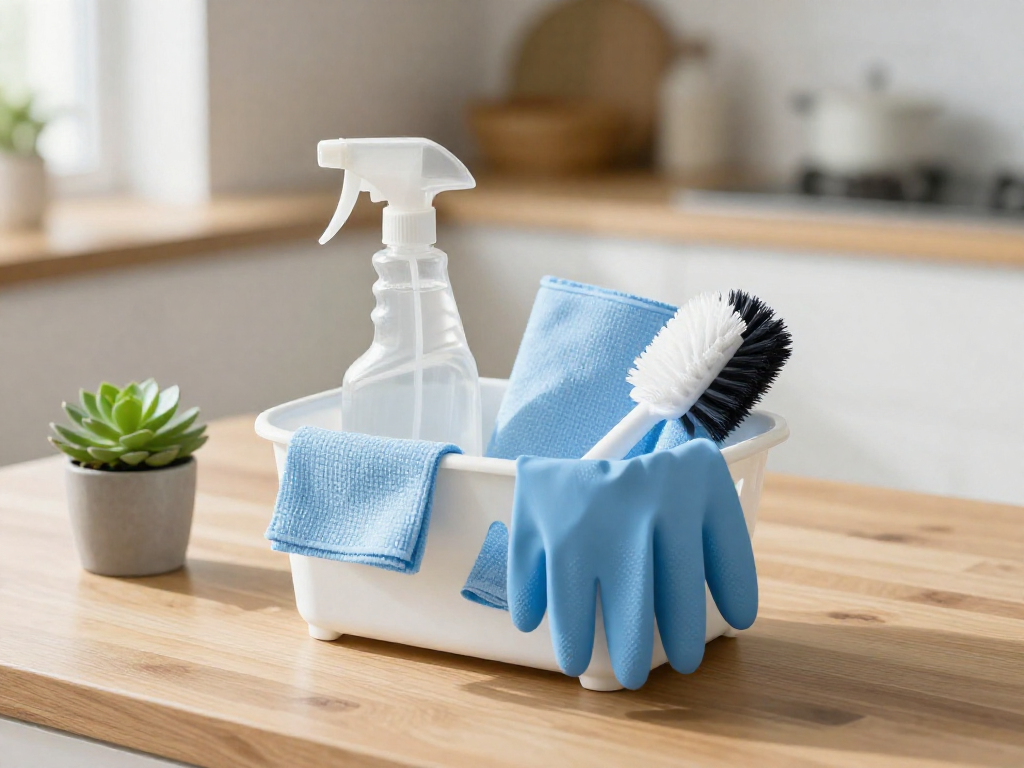
Speed Cleaning Secrets: A Listicle of Hacks for Busy Families
What are the most effective quick-cleaning tricks for a family home?
Jul 31, 2026 · 4 min read
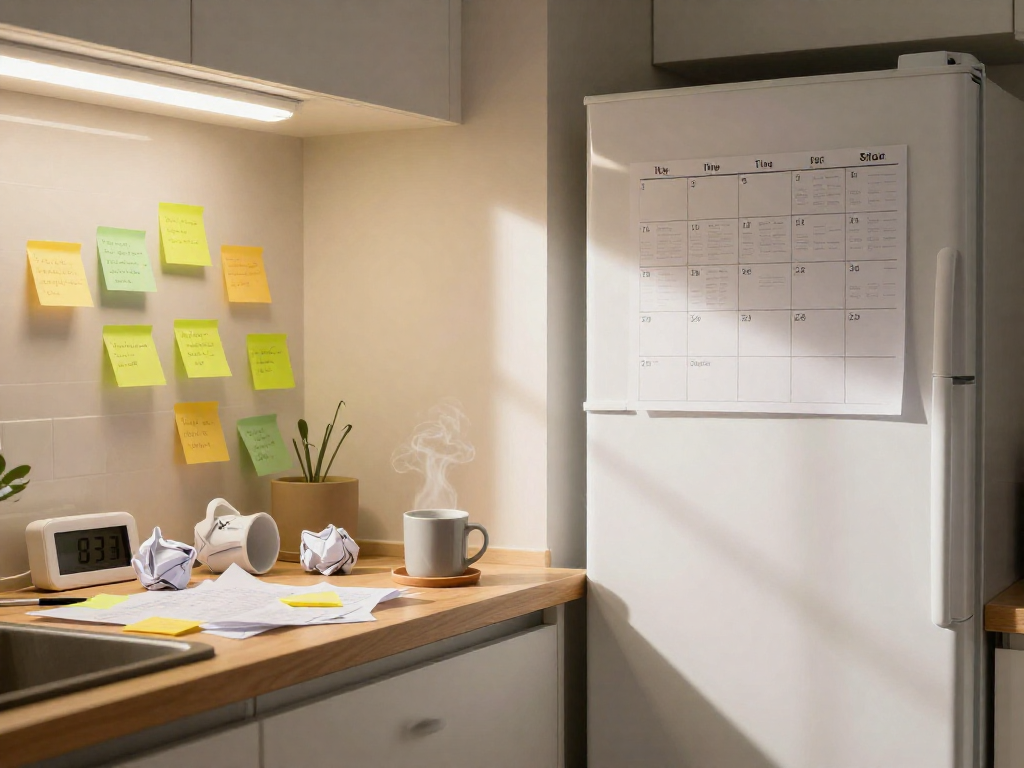
Troubleshooting Your Chore Batching: When No One Sticks to the Plan
Chore batching system not working? Uncover common pitfalls like over-ambition and accountability gaps, plus proven fixes to finally get your family on track.
Jul 31, 2026 · 8 min read