The 30-Minute Weekly Errand Sprint: A Template for Dual-Income Families
How can I batch all errands into one efficient weekly session?
On this page
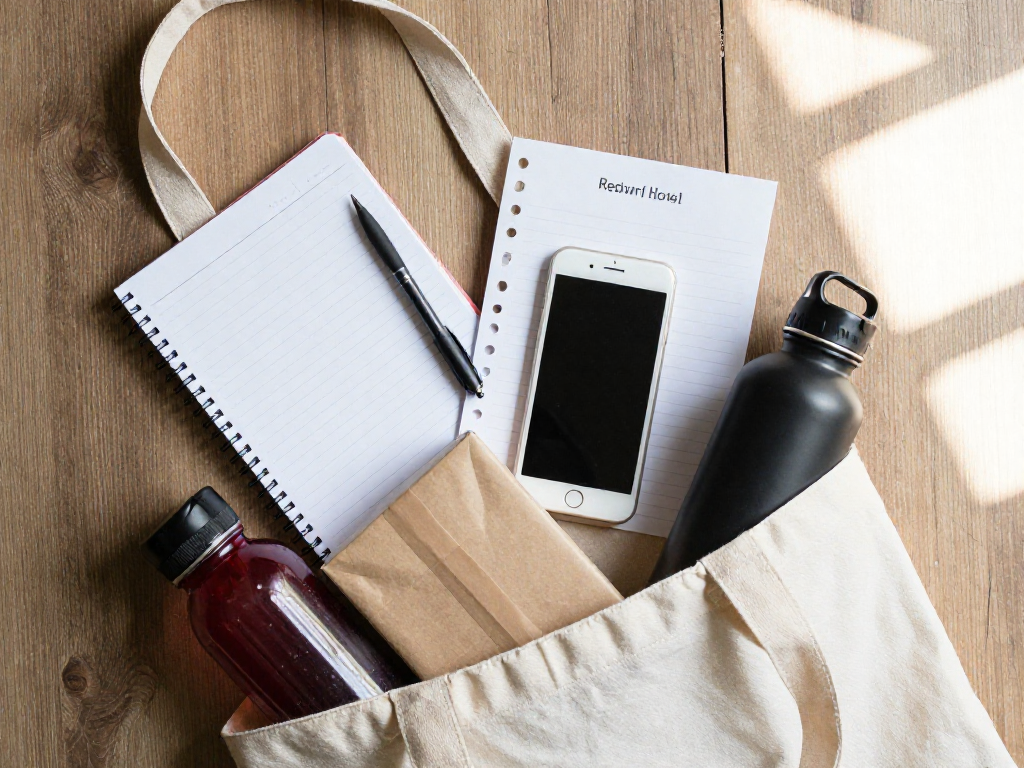
Most dual-income families waste 2-3 hours a week on scattered errands. Here’s a repeatable 30-minute sprint that gets it all done with less stress.
Why Your Errand Routine Is Draining Your Week

The key to reclaiming your evenings is to batch every errand into one tightly planned 30-minute sprint. Scattered trips consume far more time than the errands themselves—all those transitions add up, turning a few quick tasks into a significant weekly drain. A single, hyper-focused half-hour block once a week eliminates that waste.
The Night Before: Your 10-Minute Prep Ritual

Think of this as the non-negotiable fuse that lights the sprint. Without ten minutes of prep the evening before, you won't hit the 30-minute mark—you'll lose time hunting for returns, backtracking for forgotten items, or stuck in a checkout line. The ritual isn't aspirational; it's structural.
Start by physically gathering everything that needs to leave the house. Library books, dry cleaning slips, Amazon returns, the donation bag that's been haunting the front closet—pile it all by the door or load it directly into the car. If a return needs a QR code, screenshot it now. The goal is to eliminate the "oh, I forgot" scramble that kills momentum mid-sprint.
Next, open your shopping and retailer apps and place every curbside order you can, paying in advance. Groceries, hardware, pharmacy refills—anything with a pickup option. A curbside stop takes two minutes instead of twenty, so this single step often cuts total sprint time in half. While you're at it, double-check store hours and confirm that your pickup window won't clash with the next stop.
Now map the route. Drop pins for every stop, then drag them into the shortest geographical loop. Write the final sequence on a sticky note or share it with your partner so nobody asks "where to next?" mid-drive. Finally, stage the errand bag: a dedicated, always-packed tote that lives in the car. Stock it with a cooler bag for cold items, a slim folder for receipts and coupons, hand sanitizer, and a charged backup phone battery. After each sprint, re-pack it immediately so it's ready for next week.
Ten minutes tonight, and tomorrow you'll roll through stops like a pit crew—no detours, no delays, no mental load.
The Ultimate 30-Minute Errand Sprint Template
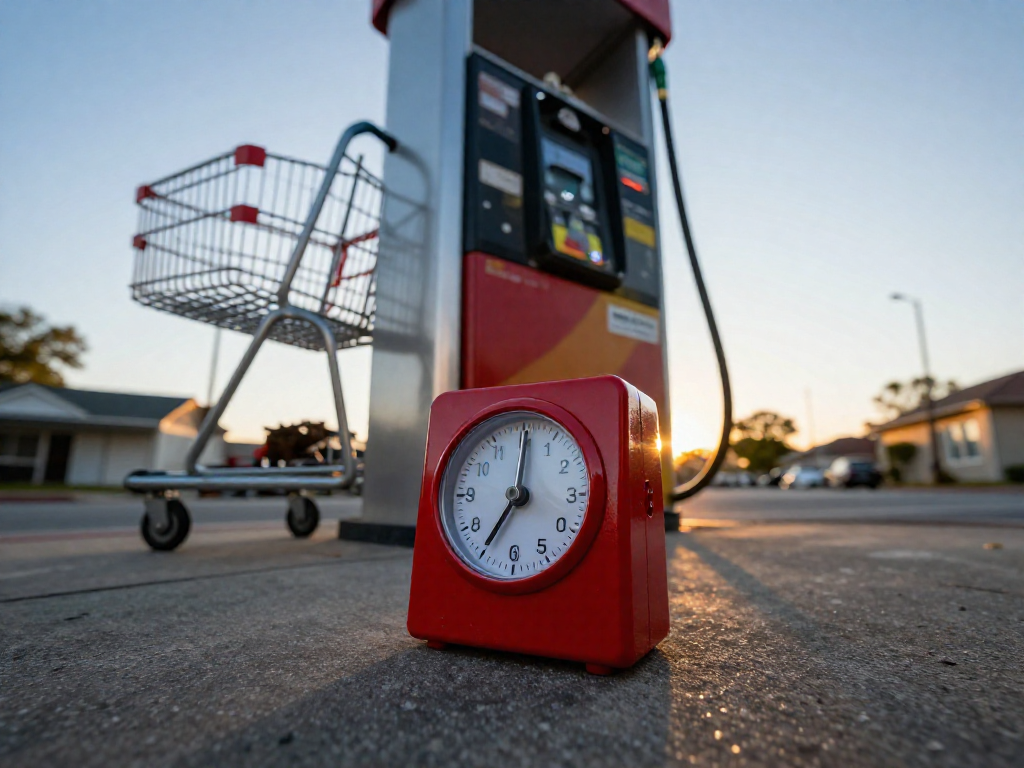
The sprint itself rides on one unbreakable rule: never more than three or four stops. Accept that, and the rest falls into place. Most weeks you are hitting the pharmacy for a prescription refill, the ATM for quick cash or a deposit, a grocery run for five to seven staples, and topping off the tank. That is a clean four-stop circuit, and it is the one I recommend nearly everyone start with.
Map your loop so every turn is a right turn. That alone can save two to three minutes of waiting at lights. A classic pattern: pharmacy first (drop off the script as you walk in, grab what you need, and the pharmacist hands you the bag before you even pull out your wallet), then ATM in the same shopping plaza, then the grocery two traffic lights down the main road, and finally the gas station that sits on the outbound side of that same intersection. No U-turns, no lefts against traffic.
Time-box each stop cold. Five minutes at the pharmacy—you are not shopping the seasonal aisle. Three minutes at the ATM; if there is a line, you go to the next bank on your route. Ten minutes inside the grocery store, and you are working from a list that fits in a handbasket. No cart, no aisle wandering. Five minutes for gas. That totals twenty-three minutes of action. Now bake in a hard five- to seven-minute buffer for the unexpected: a slow pump, a train crossing, a parking spot that makes you walk an extra forty seconds. That buffer is sacred. It turns a hopeful estimate into a reliable finish.
The sprint ends at thirty-five minutes, not a second later. If the pharmacy line ate your grocery time, you leave with what you grabbed and the rest goes on next week’s list. The same if the ATM was down. Unfinished items do not cascade into the evening; they simply roll to the next sprint. This hard stop is what keeps the system a system instead of a one-off burst of willpower.
To make this work, you need a rapid triage before you leave the driveway. Every errand gets one of three judgments: fits in the sprint, gets postponed, or gets outsourced. If something demands a conversation, a fitting room, or a return that requires a receipt hunt, it does not belong in the sprint. Push it to your once-a-month deep errand slot, or better, turn it into a curbside pickup or an Amazon return at the UPS drop box—only if that box is already on the loop. The whole point is to stop treating errands as individual missions and start treating them as a single, contained burst that respects the rest of your evening.
Route Optimization: Turn Your Sprint into a Right-Turn Loop
You don't need a logistics degree to design a smarter errand route—just borrow the UPS trick: prioritize right turns. Left turns force you to wait for gaps in traffic or sit through full light cycles. Rights keep you moving, and over a handful of stops, that savings stacks up.
Google Maps doesn't optimize for turn direction by default, but you can force a loop. Add all your stops in reverse order: farthest destination first, then work your way back toward home. The “add stop” feature will chain them into a circuit, and because you're heading generally clockwise, most turns will be rights. It's not perfect, but it's faster than the straight-line shortest-path order the app suggests.
Give your loop a quick reality check before you leave. Note any school zones that will be active during your sprint and avoid cuts through neighborhoods that back up at pickup time. For stops with tricky parking, put them at the start or end of the loop when you can unload easily, rather than boxing yourself in mid-route.
In-the-Moment Execution Hacks
A streamlined sprint relies on a few in-the-moment micro-habits. Keep a grab-and-go errand bag by the front door—your list, reusable totes, library books, returns, and a phone charger live there. When Saturday hits, you snatch it and walk out. No searching for keys or crumpled sticky notes.
At each stop, pre-load your payment method in the store’s app or use contactless pay from your phone. It eliminates the fumbling at checkout. Then, ditch the cart: carry a hand basket for three items or fewer. You’ll move faster, and your wallet won’t suffer from aisle wandering. And if a stop feels like a detour that breaks your loop, ship it. Use autoship or curbside pickup for heavy or repeat purchases—detergent, diapers, pet food—so they never become a time-sink.
Oops! Troubleshooting the Most Common Sprint Snafus
If your sprint creeps past 30 minutes, reset next week by cutting everything but the absolute essentials—mail, pharmacy, gas. That brutal trim forces you to see what truly needs a weekly slot.
Unexpected line at the post office? Skip it. Anything that can’t be dropped in 60 seconds gets punted to a mid-week “mini-run” or next week’s sprint. And when a partner or kid says, “Can you just grab one more thing?” the answer is no. Their item waits until they give it to you during the prep ritual the night before. Guard the clock.
Make It Stick: Lock In Your Weekly Sprint Time
Choose a non-negotiable weekly window—Saturday 9:00 to 9:30 AM works for many families—and guard it. Pair the sprint with a tiny reward: a coffee in the car right after makes the habit stick. After you park, spend two minutes jotting down what went smoothly and what stop felt unnecessary; tweak next week’s list accordingly. That small review loop turns a one-time hustle into an autopilot system.
FAQ
What if I have more than 4 errands in a week?
The template is designed for a core sprint of up to 4 errands, but you can split a longer list into two mini-sprints on different days. Prioritize errands by geography and urgency, and batch the second set into another short window later in the week to keep each sprint manageable.
Can I do the errand sprint with kids in the car?
Yes, but keep it fast. Leave kids in the car only when it's safe and legal (e.g., a curbside pickup or a quick drop-off with another adult waiting), and stack drive-through errands like pharmacy and bank first to minimize seat time.
What if my errands are spread out and a loop isn't possible?
If a loop isn't possible, convert the sprint to a hub-and-spoke: drive to the most central point, then do short back-and-forth trips. Alternatively, reschedule spread-out errands to a day when you're already near those locations, and stick with the 30-minute time box to prevent mission creep.
How do I handle last-minute additions from my partner?
Agree on a cutoff time—like the night before the sprint—for adding to the list. Anything after gets deferred to the next sprint or handled by the person who added it, so the planned route stays intact. A shared digital list with a 'must go' column keeps last-minute items visible without derailing the sprint.
Does the 30 minutes include drive time?
The 30 minutes is the active errand time from start to finish, including short drives between stops. It does not count the trip from home to the first stop or the return from the last stop, because those legs anchor the sprint within a larger block of time carved out for errands.
See also
- The Sunday Reset: A 20-Minute Chore Checklist for Couples
- Batch Cooking 101: How We Prep 5 Dinners in 2 Hours
- How to Build a Family Command Center That Actually Works
- The Busy Parent’s Guide to Curbside Pickup and Delivery
Related articles
The Errand List Revolution: From Mental Load to Digital Automations
How can I move from a mental errand list to an automated system?
Jul 31, 2026 · 7 min read
Troubleshooting Your Errand Batching: When Life Throws You Off
When your carefully planned errand batch falls apart due to sick kids, traffic, or last-minute curveballs, here’s how to pivot, salvage your sanity, and build a more resilient system.
Jul 31, 2026 · 10 min read
Errand Batching for After-School Chaos: A Weekday Template
How do I fit errands into the after-school window without meltdowns?
Jul 31, 2026 · 4 min read