Troubleshooting Your Errand Batching: When Life Throws You Off
What do I do when my planned errand batch fails because of unexpected events?
On this page

The Usual Suspects: Common Errand Batch Derailments
When your errand batch implodes, the fastest way back on track is to identify which category of chaos you’re dealing with—because each one has its own reset routine. Naming the culprit moves you from spinning to swapping in a backup plan.
Most derailments fall into four familiar camps. A sick child or family member is the most abrupt; it wipes out any route that hinges on your presence and often cascades into missed pickup or pharmacy runs. Last-minute work demands—the urgent client call, the late meeting that reshuffles a day—are the stealth bombs, especially when you’ve packed the margin too thin. Heavy traffic or sudden road closures hit the batch where it’s most fragile: the domino sequence of stops. And the silent killer? That forgotten essential (the return form, the school permission slip, the ingredient you need for tonight’s dinner) that forces a retrace, blowing up the efficiency of the whole loop.
Recognizing these patterns isn’t about blame—it’s about building a triage mindset. When you know it’s a sick-kid day, you don’t try to save the batch; you shift to a mini Monday sweep or hand off a pre-made bag to a partner. For work surprises, you save the non-urgent stops for tomorrow’s spare slot. Traffic? You fall back to a core-two route. The forgotten item teaches you where your "grab bag" check failed. Name it, then file it into the right recovery template.
Before You Leave: Pre-Batch Triage Tactics

The moment you sense the day tilting sideways—a sick kid, a sudden work deadline, a partner stuck in traffic—grab five minutes and triage your list before you walk out the door. Split every errand into three buckets: must-do (if it doesn’t happen today there are real consequences), should-do (important but can slide 24 hours), and skip-today (nice-to-have, but today it’s dead weight). Be ruthless. The pharmacy for a prescription? That’s a must-do. The library to return a book you can renew online? Skip it. The dry cleaner on the far side of town when you can wear something else? Should-do at best. This filter alone often shrinks a bloated batch into something doable.
Once you’ve sorted, build a Plan B route that hits only the must-dos—and design it like you’re choosing the shortest escape path. Ignore the usual loop you mapped out; instead, draw a straight line through the absolute essentials, in a tight geographic sequence, even if it means a u-turn you’d normally avoid. This is not the day for efficiency theater. If the post office and the pediatrician are 20 minutes apart but both must happen, that’s your skeleton route. Every shoulder-do stop you skip is a chunk of time and mental load you reclaim.
Before you go, do a three-minute calendar cross-check with your partner. A quick peek at shared digital calendars (or a text: “I’ve got the vet at 4—any late meetings on your end?”) prevents the classic double-booking that leaves one of you scrambling. Even better if you’ve already color-coded your calendars; it takes seconds to spot a conflict. If you spot one, negotiate: “I can take the vet if you handle pickup” beats both of you charging at a broken plan.
Now, actively decide if anything can be delegated or deferred via a delivery service. The hardware store run for a single package of screws? Many stores offer curbside pickup in under an hour—order from your phone and let someone else pull the order while you stay on your route. Prescription refill? Most pharmacies have drive-through or delivery. Library books? Renew online. This isn’t about spending more; it’s about buying back a sliver of sanity. Ask yourself: Am I the only person who can do this, right now, in person? If the answer is no, cut it.
And here’s the part nobody says out loud: you have full permission to call the whole thing off. Some days, the best batch is the one you skip. If the must-dos aren’t truly must—if the prescription can wait till morning and the milk can be borrowed from a neighbor—then text your partner, close the list, and stay put. A conscious decision to abort is still a decision; a stressful, half-done batch is just a hostage situation with your own to-do list. Try again tomorrow, when the route won’t feel like a battle.
When You’re Already Out: Real-Time Rescue Strategies
When you’re already out and things start to unravel, your first move is to lean into the buffer time you baked into the batch. That cushion between stops—even if it’s just a few minutes—isn’t empty space; it’s your strategic slack. A long checkout line, a meltdown over the wrong snack, an accident on the highway: all can be absorbed if you treat the buffer as sacred. Glance at your batch list, silently push the next stop’s ETA forward, and keep moving. No panic, no need to explain. This is exactly what the buffer was for.
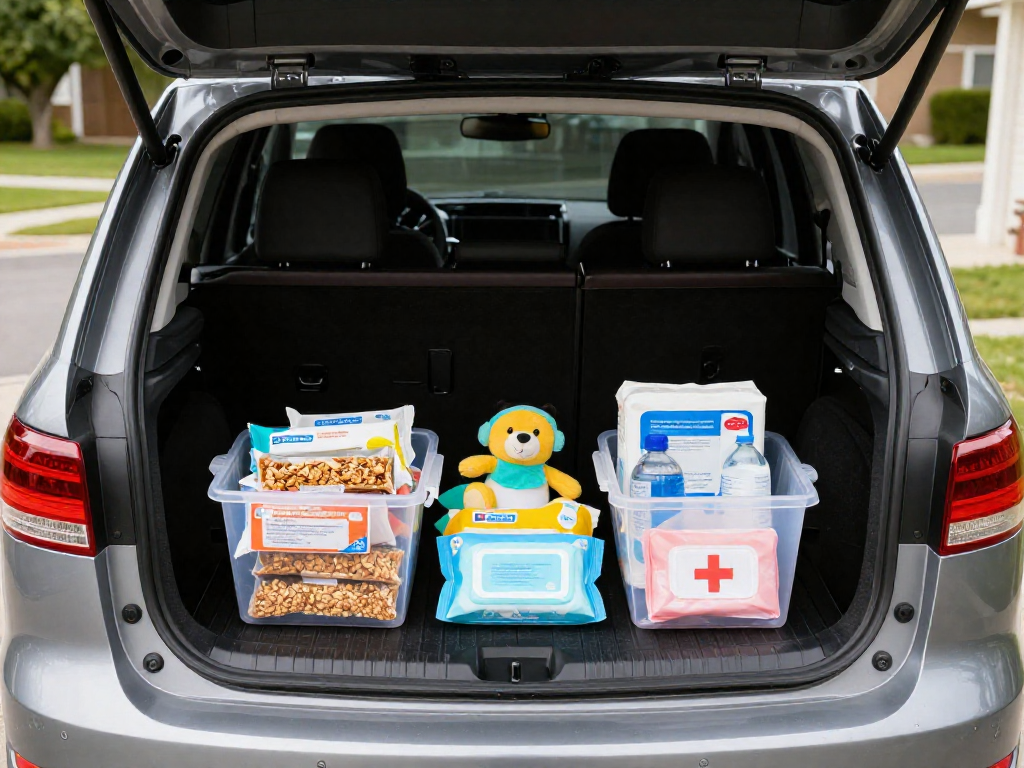
Next, deploy the pivot kit. This is a bag or car cubby you’ve pre-packed with everything that buys you a few minutes of calm. Stock it with non-perishable snacks (fruit pouches, granola bars), full water bottles, a pack of wipes, and a couple of ‘only-when-it-hits-the-fan’ novelties—fidget spinners, sticker books, a fresh pack of crayons. The kit also holds a small emergency stash for you: a tiny notebook, a pen, and perhaps a portable phone charger. When chaos hits, you pass back the items, clean the sticky faces, and use the quiet to reassess. Pull over if it’s safe, take a deep breath, and open your batch list. The pivot kit is not a treat; it’s a tactical tool. When you get home, refill it immediately so it’s always ready.
Now, with calm restored, look at your remaining stops. Slash anything that isn’t absolutely critical. That returns counter? Tomorrow. The optional grocery run for snacks? Cut. Guilt often hits here—a feeling that you’re failing to follow through. Override it. The people waiting for you (or for a text) will survive a delay. Send a quick message: ‘Running behind—skipping this one, will hit it tomorrow.’ Most folks prefer a candid heads-up to a flustered, late arrival. If you’ve promised a family member you’ll pick something up, let them know your revised plan and offer to defer. Then mark the skipped errand in your shared family app so someone else can grab it or so you remember to reschedule.
While you text, open your mapping app (the one with live traffic). It likely already knows the delays, but you need to take control. Drag the remaining stops into a new order that actually works right now, even if it’s a wonky zigzag. Don’t let the app’s original route bully you. If someone is waiting for you at a particular location, share your live ETA with a tap. A quick screenshot of the map with your estimated arrival can replace a dozen anxious texts. This digital shuffle takes less than a minute and can salvage a derailed batch.
Finally, ask yourself the hard question: is it time to abort? The sunk-cost fallacy will whisper that you’ve already invested so much—but pressing on often just compounds the misery. Use a quick checklist: Are you so stressed that you’re snapping at the kids? Is anything left truly time-critical (a medication pick-up, a closing window)? Can you realistically accomplish everything without ruining the rest of the day? If the answer points to aborting, draw a line under the batch. Salvage what you’ve already accomplished—that prescription is in hand, the dry cleaning is dropped off—and head home. Transfer the remaining errands to tomorrow’s batch or a quick after-bedtime sprint. There’s no prize for finishing a batch at the cost of everyone’s sanity. Unpack the pivot kit, restock it, and give yourself permission to reset.
The Guilt Trap: Managing the Emotional Fallout
When the errand batch collapses, the sinking feeling isn't just about the lost time—it's the internal voice that says you failed. That guilt is a trap. Errands are a logistics game, not a test of character. One broken day doesn't erase a week of solid planning.
Give yourself a three-second rule: when frustration spikes, you have three seconds to label it—"frustration"—and then decide on the one small thing you can still do. Maybe it's grabbing the most critical item before heading home, or texting your partner that the library trip won't happen. That tiny action breaks the spiral and reclaims a sense of control.
Once you're home, avoid a blame spiral. Instead, use a five-minute check-in with your partner that focuses on "what happened," not "who's at fault." Ask, "What can we shift this week to make it easier?" Maybe that means swapping a task or moving an errand to a different day. Sharing the load isn't about fairness in the moment; it's about building a system that absorbs shocks together.
After the Dust Settles: Tweaking Your Batching System
A derailed errand batch feels like a personal failure, but it’s the most useful data point you’ll get all month. Spend five minutes—just five—to capture what happened before you move on. Your system gets stronger every time you treat a disruption as feedback.
Start with a quick post-mortem. Was the cause avoidable? A missed calendar alert, a forgotten item that forced a second stop, a kid home sick? Those are fixable. But if it was a random traffic snarl or a store closing early, that’s just life—your system doesn’t need an overhaul, it needs a wider buffer. The distinction matters, because you’ll waste energy trying to prevent the unpreventable. Write one sentence on a shared family note: “Batch failed because ________.” That lone line will reveal patterns over time.
Next, adjust your batching schedule to match reality. If you’re constantly hitting lunch rush or after-school crowds, move your errands to Tuesday mornings (if you have flexibility) or Sunday evenings when stores are dead. Shorter batches work better for volatile weeks: instead of four hours for everything, do two-hour power batches twice a week. And build in a 30-minute empty cushion between stops. That gap absorbs delays without cascading. When a batch always runs tight, something has to give—so drop the least critical errand or assign it to delivery.
Create a shared family note (Apple Notes, Google Doc, a Slack channel—whatever everyone actually checks) with a “Contingency Protocols” list. This isn’t a detailed flowchart; it’s three bullet points that answer: Who grabs the kids if I’m stuck in traffic? Who covers the pharmacy pickup when my meeting runs over? What errands get skipped entirely if time slips? Write these down and review them once a month. When everyone knows the default backup, last-minute chaos becomes a simple handoff.
Experiment with alternative fulfillment modes until one sticks. For non-urgent household items, set up a recurring Amazon Subscribe & Save or a Walmart grocery pickup—these don’t require your physical presence. For one-off needs, try curbside pickup at stores you’d normally walk into. And if a neighbor is also batching errands, propose a swap: you grab their dry cleaning when they’re swamped, they handle your library returns next time. The best systems rely on a network, not just your own calendar. Treat each tweak as a small bet: try it for two weeks, keep it if life runs smoother, discard it if it doesn’t.
Your Emergency Errand Batch Cheat Sheet
When your errand day goes sideways, pull this out — your just-in-case checklist.
- Triage before you leave: pare the list to only what can’t wait or move online.
- Communicate with your partner: a quick text resets expectations and divides leftover tasks.
- Pack a pivot kit: granola bars, phone charger, reusable bags, and a spare activity for kids.
- Know your abort criteria: set a hard stop—if two stops get skipped or moods tank, head home.
- Post-mortem within 24 hours: a 5-minute debrief pinpoints what to adjust for next week.
FAQ
How do I handle an errand batch when my kid gets sick suddenly?
Triage the list immediately into three tiers: absolute must-do, can be done remotely, and can wait. Do only the must-do items that have no workaround (like picking up a prescription) and either handle them during a caretaker swap or through a quick, solo stop. Move everything else to a designated backup errand window later in the week that you already keep open for exactly this kind of disruption.
What if I can’t postpone all errands because some are urgent?
Split the batch into urgent and non-urgent, then get creative with fulfillment. For the urgent ones, see if you can switch to delivery, curbside pickup, or ask a nearby friend to grab them. If you must go out, condense the trip to the single most efficient route and time it when a partner or family member can cover for even thirty minutes.
How can I avoid feeling guilty when I have to cancel errands?
Recognize that errand batching is a tool you control, not a rigid schedule that controls you. Build a weekly 'flex' slot into your routine so that cancelled tasks automatically slide into a planned catch‑up time—then nothing is truly dropped. When you see the backup slot working, the guilt disappears because the system proves it can absorb real‑life interruptions.
See also
- Errand Batching 101: The Ultimate Time-Saver for Busy Families
- How to Sync Calendars with Your Partner Without Friction
- The Busy Parent’s Guide to Delegation and Asking for Help
- Creating Your Family’s Master Batching Template
Related articles

The Errand List Revolution: From Mental Load to Digital Automations
How can I move from a mental errand list to an automated system?
Jul 31, 2026 · 7 min read

Errand Batching for After-School Chaos: A Weekday Template
How do I fit errands into the after-school window without meltdowns?
Jul 31, 2026 · 4 min read

Kid-Errand Merge: Combining Playground Trips with Grocery Runs
How can I combine errands with kid-friendly activities?
Jul 31, 2026 · 5 min read