Meal Prep for Two Cooks: Dividing Tasks When Both Parents Are Involved
How can couples efficiently share meal prep duties?
On this page
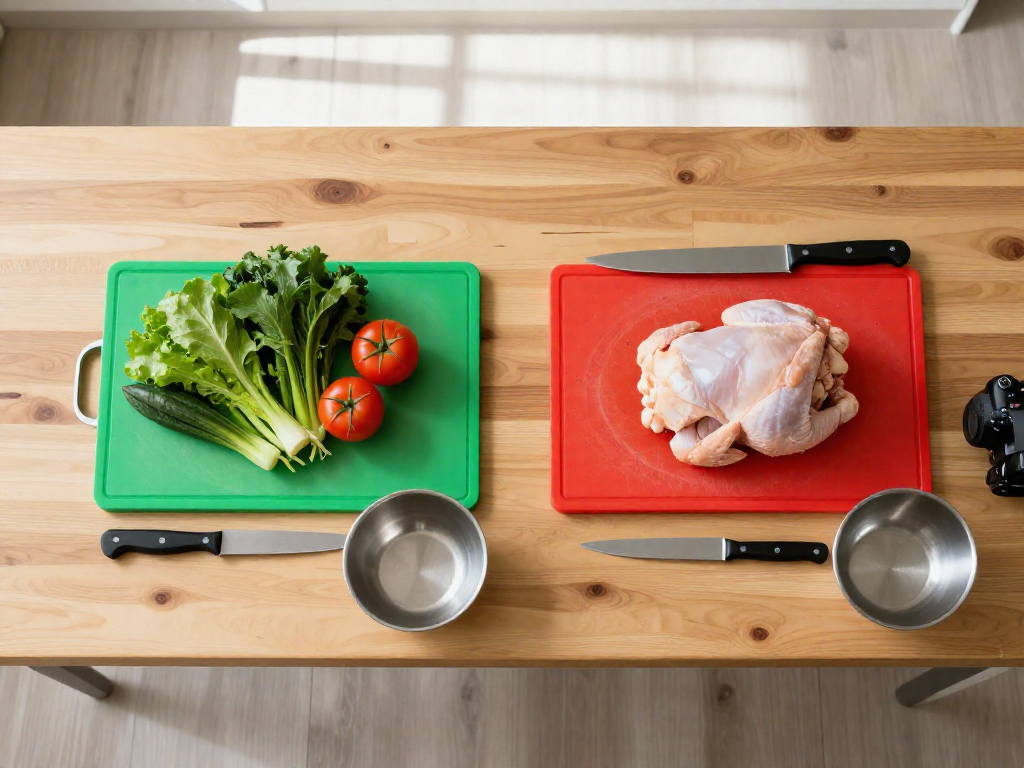
Most parents know meal prep is easier with two, but without a plan, the kitchen becomes a dance of 'Excuse me' and 'What are you working on?' This guide outlines a system for couples to divide tasks so both stay busy, get more done, and actually enjoy the process.
Start with a Couple's Huddle: Pre-Prep Planning

Sharing meal prep efficiently isn't about working side by side in silence—it starts with a focused five-minute planning huddle before anyone picks up a knife. This small ritual answers the biggest question couples face: who does what, and when? Without it, even skilled cooks end up stepping on each other’s toes, doubling tasks, or leaving one person adrift while the other burns onions.
The huddle begins with nailing down the week’s menu. Decide together what you’re eating each night and, critically, which prep steps can be batched. One cook might handle all the proteins for Monday and Wednesday; the other knocks out vegetables for Tuesday and Thursday. This clarity kills the “what’s for dinner?” debate and turns parallel work into a smooth assembly line.
Next, assign roles bluntly by strength. If you’re the fast chopper, own the knife work; if your partner multitasks like a pro, put them on seasoning, marinating, and jumping between pots. Don’t try to be equitable down to the minute—play to what each of you does well so the session builds momentum. A shared checklist, whether on a whiteboard or a notes app, is the secret weapon. Write down every task in order, then put initials next to each one. As items get crossed off, no one has to ask “What should I do next?”—the list does the thinking.
The payoff is immediate. You walk into the kitchen with a battle plan, not a vague sense of shared duty. The huddle takes five minutes and saves you from the frustration of misaligned effort. It’s the difference between feeling like you’re directing traffic and actually cooking together.
Split Tasks by Type, Not by Recipe
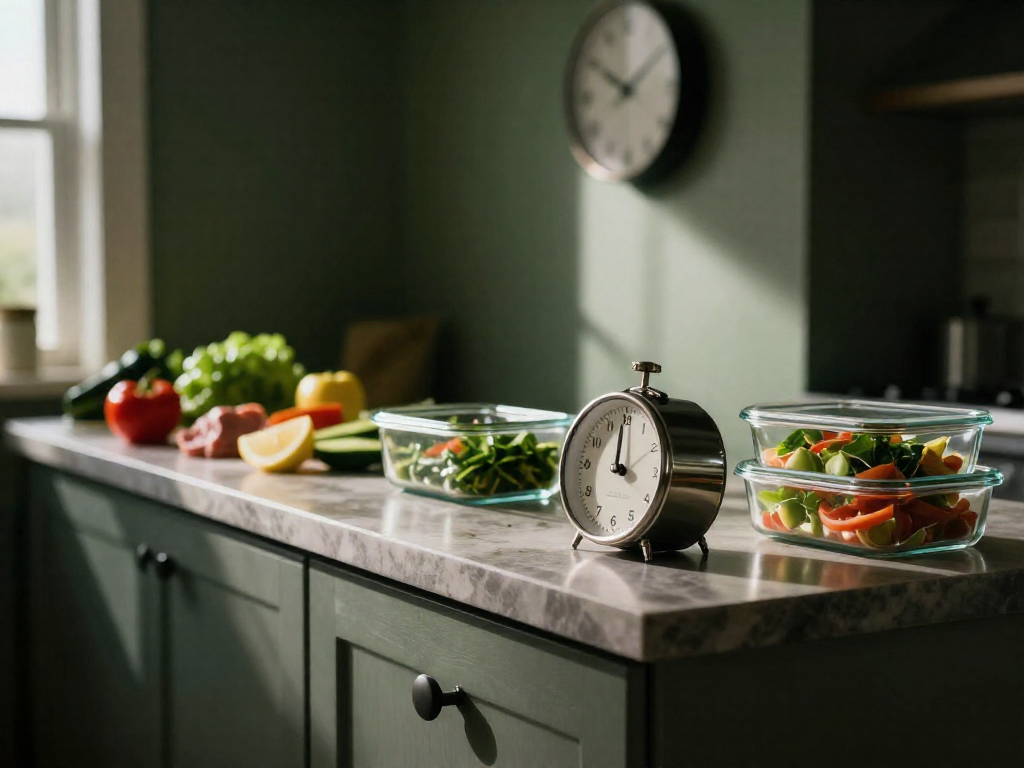
When two cooks divide a meal-prep session recipe by recipe, you're really just doubling the solo work—each person hunts for ingredients, switches between tools, and wades through multiple steps. A faster, less chaotic system is to split tasks by type: one person owns all the produce prep, the other handles proteins, or you create an assembly line for repetitive jobs.
The simplest split is the vegetable station versus the protein station. One cook washes, peels, and chops every onion, carrot, bell pepper, and herb needed across the week's dishes. Meanwhile, the other cook browns multiple batches of ground beef, seasons chicken thighs, or portions salmon fillets. This parallel workflow means both knife and stove are active simultaneously, and you eliminate the friction of swapping between vegetables and meat. When the veg person finishes, they move on to blending sauces, portioning grains, or starting an assembly line for lunches.
For packing lunches or rolling wraps and burritos, an assembly line turns repetitive motion into a sprint. Set up containers on the counter; one person spoons in the base (rice, greens), the next adds protein, the next adds toppings and a sauce. You'll knock out 20 lunches in the time it normally takes to build five. The same approach works for freezer breakfast sandwiches, snack boxes, or layered salads.
Think like a short-order kitchen: each person stays in their lane for a continuous block. Sort your prep list by ingredient category, not by recipe—group all the onions together, all the chicken, all the dressings. This cuts down on tool changes, sink jams, and the all-too-familiar 'Wait, did you already add salt to this?' confusion. Next session, hand one partner a pile of vegetables and the other a stack of meat trays; the clock will prove the point.
Kitchen Traffic Control: Avoid Collisions and Downtime
Assign work zones before you start. One person takes the counter near the stove — that's the cooking zone. The other claims the island or the far counter for the prep zone. Keep a clear packing zone near the fridge or the end of the counter for portioning out meals. Decide upfront who owns the stove, who owns the sink, and who handles containers. That alone prevents the most common bottleneck: two people reaching for the same burner or cabinet at the same moment.
Move with a quick verbal signal — a hand on the shoulder or a simple "behind you" — so you never bump mid-task. In tight kitchens, adopt a one-way traffic rule around the island or peninsula. Swap stations only between major tasks, not while someone is still chopping. If you're both at the stove, one person becomes the finisher and the other the taster. It sounds small, but naming the roles stops you from hovering in each other's space.
Quick Checkpoints: Communication Without Micromanaging
Frequent verbal check-ins become noise, not help. Instead, set a shared kitchen timer for 20‑minute intervals—when it beeps, both of you glance at progress and silently gauge if you’re in sync. Keep a small whiteboard on the fridge or prep station: tick off steps as you finish them. No one has to ask “Are you done?” If one cook pulls ahead, a simple phrase like “I’m ahead—want to hand me your next task?” balances the load without micromanaging.
Cleanup as a Two-Person Job
Make cleanup part of the routine, not an afterthought. While one cook is at the stove, the other washes cutting boards, loads the dishwasher, and wipes down surfaces as they go. Swap roles halfway—nobody gets stuck scrubbing for the whole session. When the last batch hits the oven, set a five-minute timer and both of you tackle any remaining mess together so the kitchen is ready for the week ahead.
A Sample Meal Prep Timeline for Two (Sunday in 90 Minutes)
Here’s a battle-tested blueprint that turns your Sunday into a meal factory in about an hour and a half. The output: three to four dinners plus a batch of lunches, all packed and labelled before you wipe down the counters.
Minute 0–10: Cook A grabs the produce and starts washing and chopping everything on the prep list—onions, peppers, broccoli, whatever the week demands. Meanwhile, Cook B seasons the bulk proteins (chicken thighs, ground beef, tofu) and gets them sizzling in a hot skillet. This parallel work cuts through the biggest time sink: waiting.
Minute 10–30: Cook A moves to assembly duty, layering casseroles, stuffing peppers, or filling baking dishes while the oven preheats. Cook B drains the browned meat, starts a pot of boiling water, and gets pasta or quinoa going. If you have a slow cooker, now’s the moment to dump in a chili or stew.
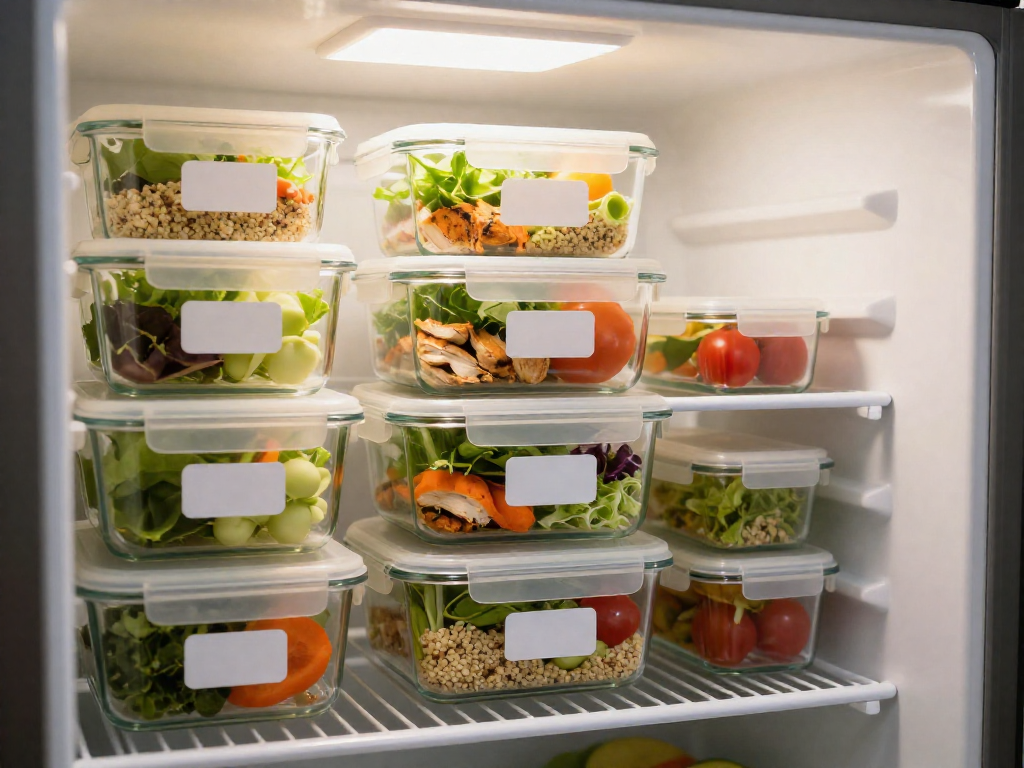
Minute 30–50: The kitchen shifts to packing mode. Both cooks portion everything into containers—tonight’s dinner, tomorrow’s lunch, Thursday’s reheatable tray. Label as you go with a sharpie on masking tape: contents and date. No mystery containers in the fridge.
Minute 50–90: Joint cleanup. One person washes the major tools, the other wipes down surfaces and loads the dishwasher. As a final step, stack everything in the fridge with the soonest meals at the front. Walk away with a clean kitchen and a week’s worth of food.
Helpful Tools for Parallel Prep
The biggest bottleneck in a two-cook kitchen isn’t skill—it’s waiting for a single tool. Invest in a second set of measuring spoons and cups so no one stands idle while the other scoops flour. Extra cutting boards (color-coded or simply distinct) and a stack of prep bowls let each cook work on different ingredients without wiping down. When the oven is the constriction point, add a baking steel with a shelf divider to roast chicken and vegetables at two temperatures simultaneously—a real time-saver on Sundays. If you use a slow cooker or pressure cooker, consider a second unit; having two small Instant Pots is far more flexible than one giant pot when two people are in charge. Finally, give each cook a dedicated kitchen timer (the magnet-backed kind) to avoid crossed alarms and confusion. These small duplications cost less than the frustration they prevent.
Wrap-Up: Turn Meal Prep into a Weekly Rhythm
Consistency beats perfection. After each session, ask your partner what worked and what felt clunky—then tweak the plan together. That quick check-in turns meal prep into a shared rhythm you'll both look forward to.
FAQ
What if one partner is much faster at cooking than the other?
Assign the faster cook to time-sensitive, active tasks like sautéing or stir-frying, while the slower partner takes on preparatory work that can be done in advance without slowing the process. The slower cook can focus on detail-oriented jobs like trimming proteins, measuring dry ingredients, or staging cleaned tools. This way, both stay productive without the faster cook waiting on the other.
How do we decide who does which task?
Start with a simple list of all tasks and let each person pick the ones they mind least or are best at—one might take knife work while the other manages the stove. Rotate the less-desirable tasks weekly to keep things fair, and establish a default division that becomes second nature after a few sessions.
Can we still meal prep if we only have one free hour together?
Yes, focus on high-impact, parallel tasks: one person browns proteins while the other chops vegetables, or you both assemble sheet-pan meals simultaneously. Stick to a repeatable template like cooking a grain, roasting a tray of mixed vegetables, and prepping a marinade, then combine components later in the week.
What if we have a very small kitchen with limited counter space?
Stage your work zones by having one person prep at the counter while the other uses the sink or stove, then switch roles halfway. Use vertical aids like stackable cooling racks, wall-mounted shelves, or a rolling cart to hold ingredients, and adopt a strict clean-as-you-go rule to free up surfaces quickly.
How do we avoid arguing over who does the tedious tasks?
Make it a game by racing to see who can finish a chore first, or set a timer and switch tasks when it goes off. Rotate the least-favorite duties each session so no one is stuck with them every time. Whenever possible, batch tedious prep like chopping onions or trimming meat in advance together during a low-pressure moment.
See also
- Batch Cooking 101 for Beginners
- The Busy Family's Weekly Chore Template
- Freezer Meal Prep: A Dual-Income Family's Guide
- Seasonal Prep Systems to Save Time All Year
Related articles
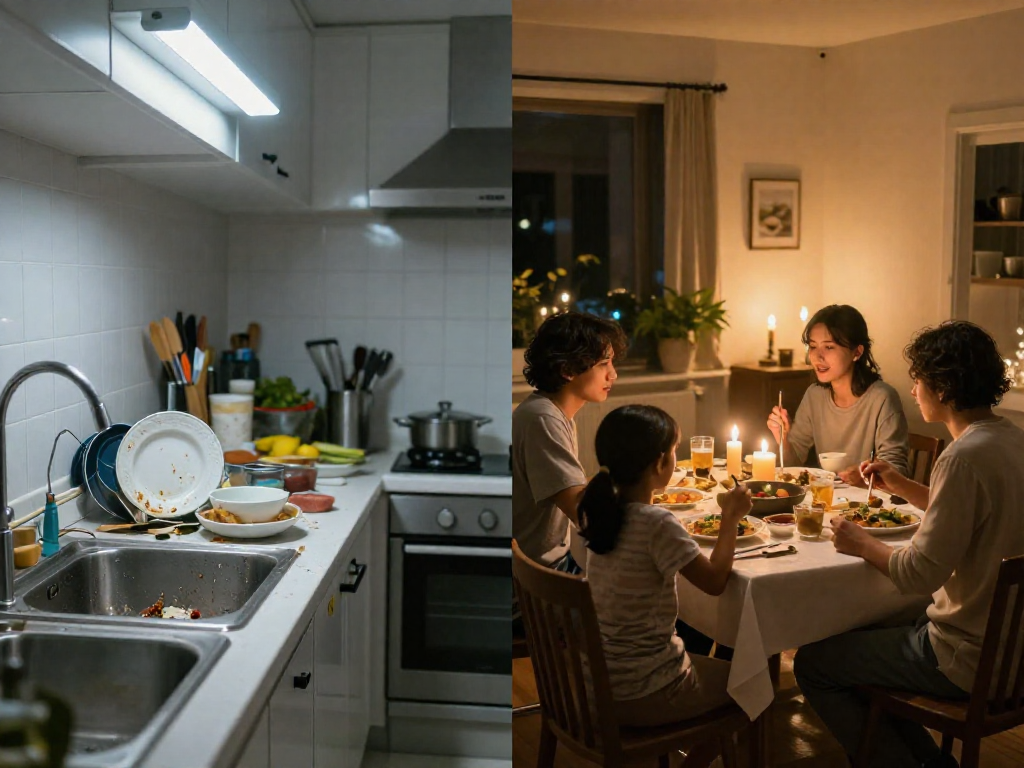
From Chaos to Calm: How Meal Prep Transformed Our Evenings
Discover the emotional and practical impact of consistent meal prep on family life—less stress, more connection, and calm evenings.
Jul 31, 2026 · 5 min read
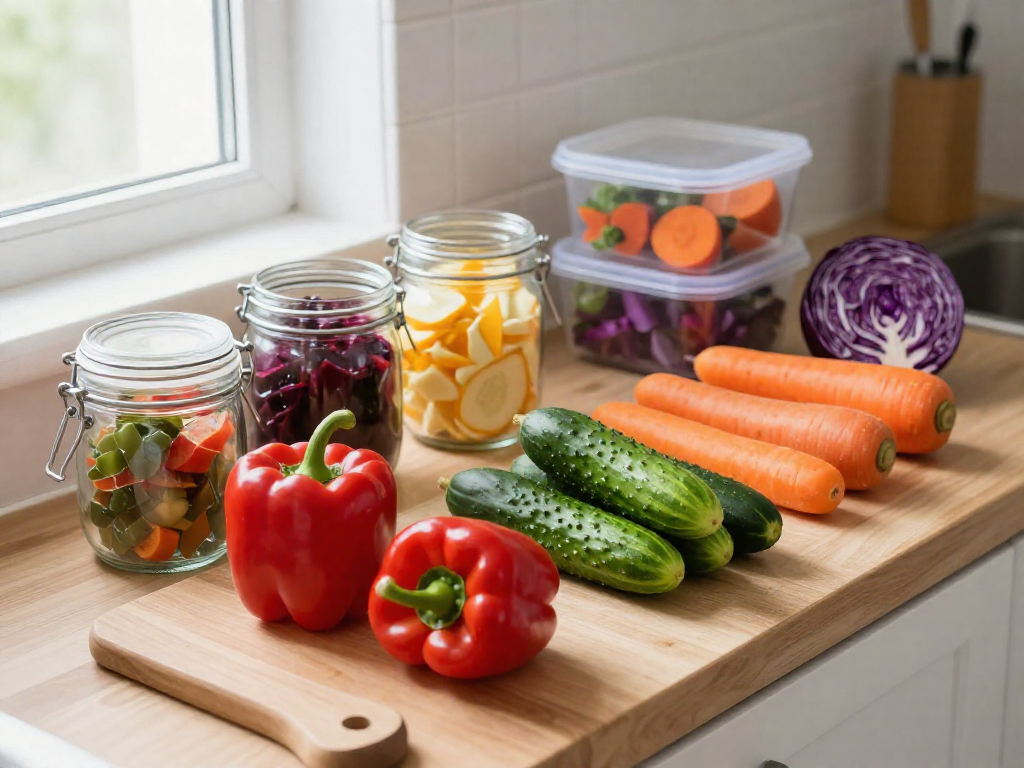
The No-Cook Weekend: How to Prep Without Turning on the Oven
How can I meal prep in summer or without heating up the kitchen?
Jul 31, 2026 · 7 min read
Meal Prep Containers: A Complete Guide for Dual-Income Families
What are the best containers for family meal prep, considering portions, storage, and reheating?
Jul 31, 2026 · 8 min read